 Wenda Electronics
Wenda Electronics
Wenda Electronics
Select high-density precision interfaces manufactured to rigorous industrial standards.
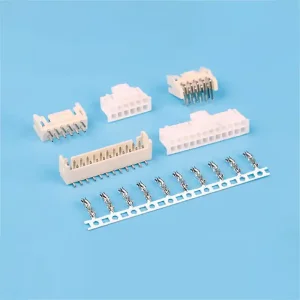
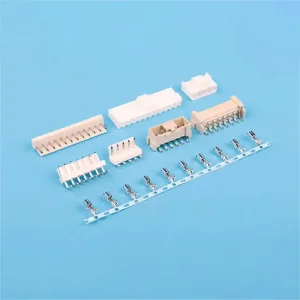

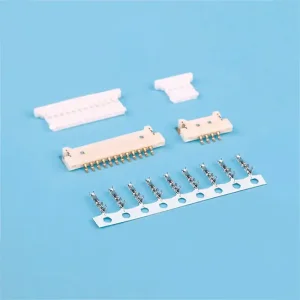
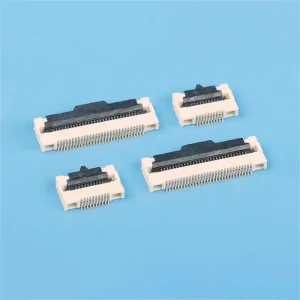
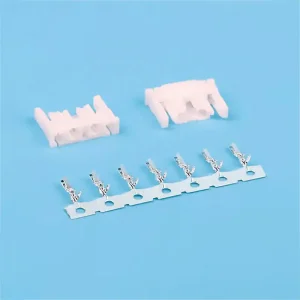
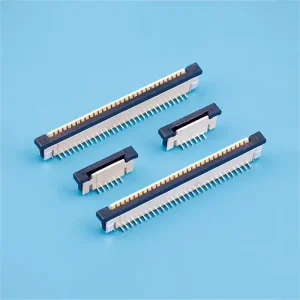
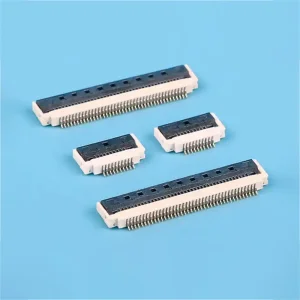
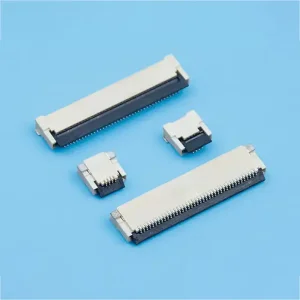
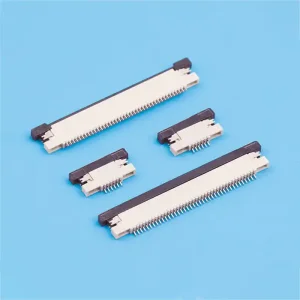
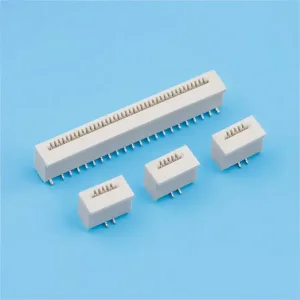
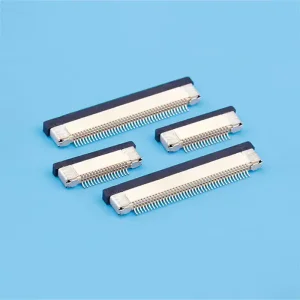
In high-density electronic assemblies, the Surface Mount Technology (SMT) FFC (Flexible Flat Cable) socket acts as a crucial mechanical interface. Operating under strict physical tolerances, these components facilitate direct routing from primary logic boards to peripheral displays, sensors, and power systems. Modern designs incorporate high-performance engineering plastics, advanced metallic alloys, and dynamic locking systems to maximize high-speed transmission and board-level integrity.
The reliability of an SMT type FFC/FPC connector depends heavily on three key elements:
During high-temperature automated reflow soldering, SMT type FFC sockets must maintain terminal coplanarity below 0.10mm (ideally 0.08mm). Any deviation leads to open solder joints or weak mechanical fillets, causing intermittent connection failures under thermal expansion or structural vibration.
"The shift toward sub-0.5mm pitches and ultra-low profile configurations (down to 1.0mm mounted height) has transformed FFC socket design. Engineers must balance thin component geometry with the structural strength required to survive high reflow temperatures."
For international procurement teams, partnering directly with tier-one Chinese connector manufacturers like Zhejiang Wenda Electronics Co., Ltd. offers significant advantages. Located in the Yueqing Bay Lingang Economic Development Zone in Zhejiang Province—a major hub for precision electronics manufacturing—our facility is optimized for rapid production and international delivery. Located just 50 kilometers from Wenzhou Airport and next to the Wenzhou Light Rail Line S2, our logistics network ensures fast transit to global shipping ports.
Founded in March 2007, Wenda Electronics has grown into a highly vertically integrated manufacturing enterprise. Spanning a construction footprint of over 25,000 square meters, our facility employs a dedicated team of over 500 electronics professionals, precision mold designers, quality control engineers, and assembly specialists.
By keeping product research, tooling fabrication, precision injection molding, terminal stamping, and automated assembly in-house, we eliminate external markups and maintain complete control over quality and lead times. This vertical integration allows us to quickly develop custom connector prototypes and seamlessly scale up to high-volume production.

Equipped with over 500 sets of advanced machinery to ensure zero-defect output and absolute reliability.
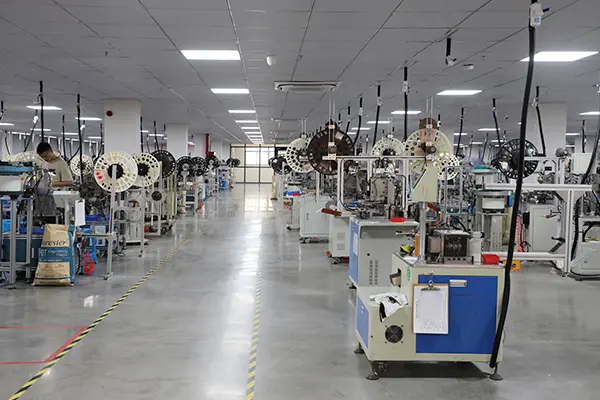
Our facility runs high-speed precision stamping presses and micro-injection molding machines. These systems can maintain tight housing tolerances within ±0.02mm, ensuring consistent mechanical fits across high-volume production runs.
Every single terminal and SMT co-planarity alignment undergoes inline inspection via high-resolution multi-camera CCD systems. Parts with minor deviations are automatically rejected, keeping defect rates below 50 PPM.
Our on-site labs run advanced environmental stress tests, including reflow simulator setups, 2D optical measurement systems, RoHS testers, coating thickness gauges, contact resistance meters, and thermal cycle chambers.

Our modern manufacturing facility is designed to meet strict international environmental and quality control standards.
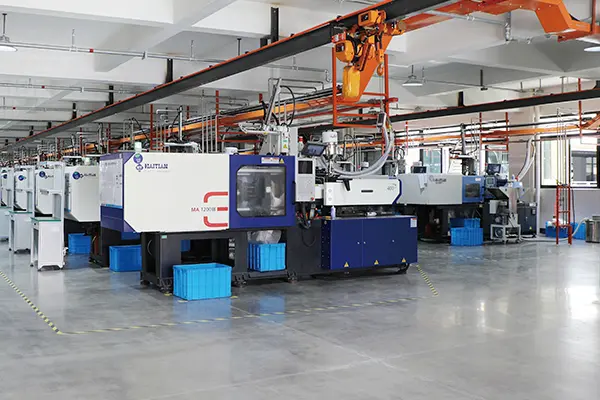
High-speed automated presses run specialized tooling to stamp thousands of precision pins per minute with exceptional accuracy.
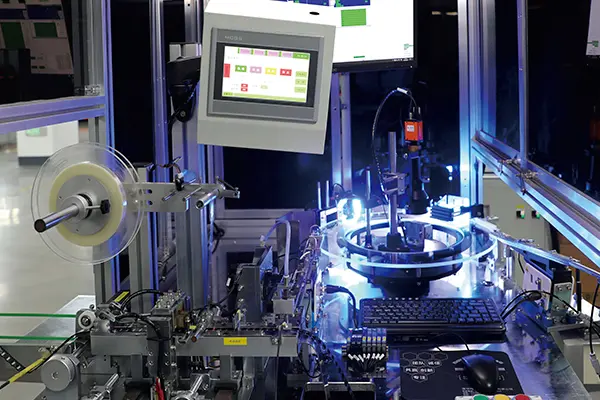
High-end injection systems process high-performance engineering plastics like LCP under tightly regulated temperature profiles.
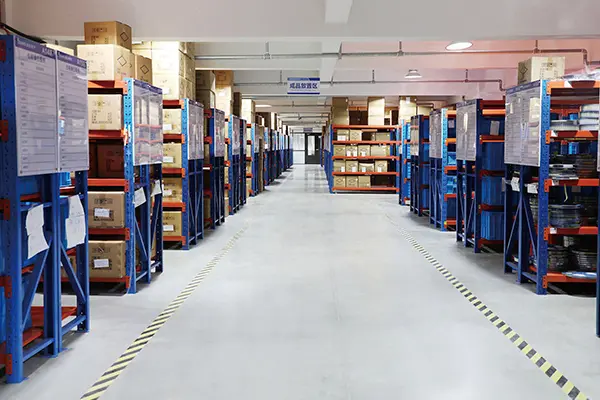
Our dynamic inventory management system coordinates timely, structured shipments to international logistics centers.
Equipped with analytical instruments to run complete electrical, mechanical, and environmental validation cycles on new designs.
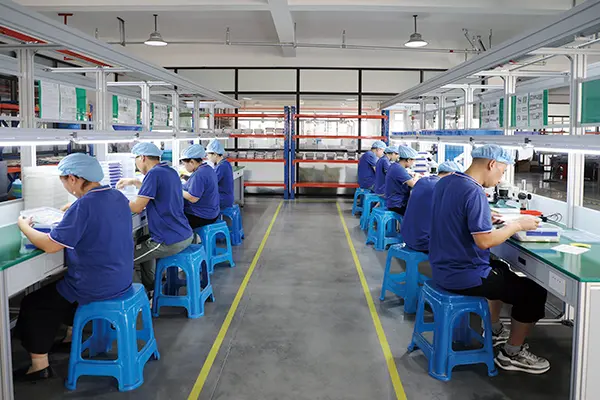
Skilled technicians receive ongoing training in high-precision processes, ensuring exceptional quality control at every stage.
Ensuring highly reliable and stable signal and power transmission across critical modern operating environments.

Connectors are comprehensive carriers of "power transmission + safety protection + intelligent interaction + mechanical adaptation" in new energy chargers, and their performance directly affects charging efficiency, safety, compatibility and user experience. As new energy vehicles develop towards higher voltages (such as 800V platforms) and higher power (such as 480kW ultra-fast charging), connectors are upgrading towards high current carrying capacity, high temperature resistance, miniaturization and intelligence, becoming one of the key links in the breakthrough of new energy charging technology.
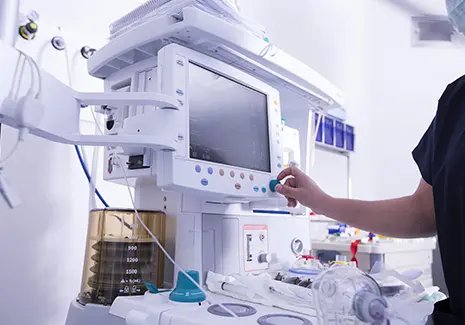
Connectors in medical equipment are "precise carriers for signal transmission", "reliable interfaces for power supply", and "safety valves for fluid control". Their performance directly affects diagnostic accuracy, treatment safety, and the efficiency of medical processes. With the development of medical technology towards minimally invasive and intelligent (such as telemedicine devices and wearable monitoring devices), connectors are upgrading towards miniaturization, high integration, asepsis and intelligence (such as built-in chips for accessory identity recognition), becoming an important support for the innovation of medical equipment.

Connectors in mobile phones serve as the "collaborative link for internal components" and the "functional interface for external interaction". Their design directly affects the phone's battery life (charging efficiency), data transmission speed, functional expandability and durability. With the development of mobile phone technology, connectors are also upgrading towards miniaturization (saving internal space), high integration (such as USB-C unified charging/data/video interfaces), and high reliability (withstanding high temperatures during fast charging and mechanical stress of foldable screens), becoming an important support for the improvement of mobile phone performance.
When selecting SMT type FFC/FPC sockets for high-frequency or high-reliability applications, engineering teams must evaluate several critical performance metrics to prevent unexpected failure modes in the field:
| Performance Characteristic | Typical Industry Target | Wenda Premium Standard Metric | Engineering Significance & Purpose |
|---|---|---|---|
| Pitch Configurations | 0.5mm, 1.0mm, 1.25mm | 0.5mm to 1.25mm (Customizable) | Determines trace routing density on host PCB and trace-to-trace clearance. |
| Contact Resistance | < 30 mΩ (Initial) | < 20 mΩ (Highly Stable) | Minimizes signal attenuation and local thermal generation at current interfaces. |
| Insulation Resistance | > 100 MΩ at 500V DC | > 500 MΩ at 500V DC | Prevents stray current leaks and crosstalk between adjacent pins under high humidity. |
| Dielectric Withstanding Voltage | 250V AC / 1 Minute | 500V AC / 1 Minute (No Flashover) | Ensures high dielectric integrity and prevents transient voltage breakdown. |
| Reflow Solder Thermotolerance | Peak 250°C (10s Max) | Peak 260°C to 265°C (Leaded/Lead-free SAC305) | Guarantees zero structural deformation or housing blistering during SMT reflow. |
| Durability Cycles | 20 Mating Operations | Up to 30 Mating Cycles (Gold-plated terminals) | Ensures contact integrity through multiple field service and maintenance cycles. |
As micro-electronic architectures become more dense and shift toward high-speed data protocols, modern SMT type FFC/FPC connectors are evolving to meet these demands:
Global OEM, ODM, and EMS corporations demand much more than low pricing from their supply partners. Operating within highly regulated fields like automotive, aerospace, and medical instrumentation requires strict quality management and environmental compliance.
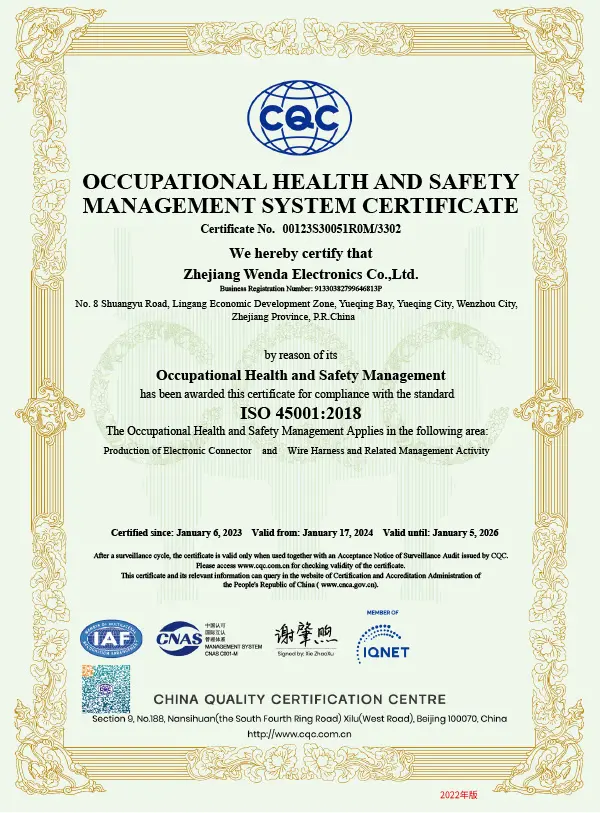
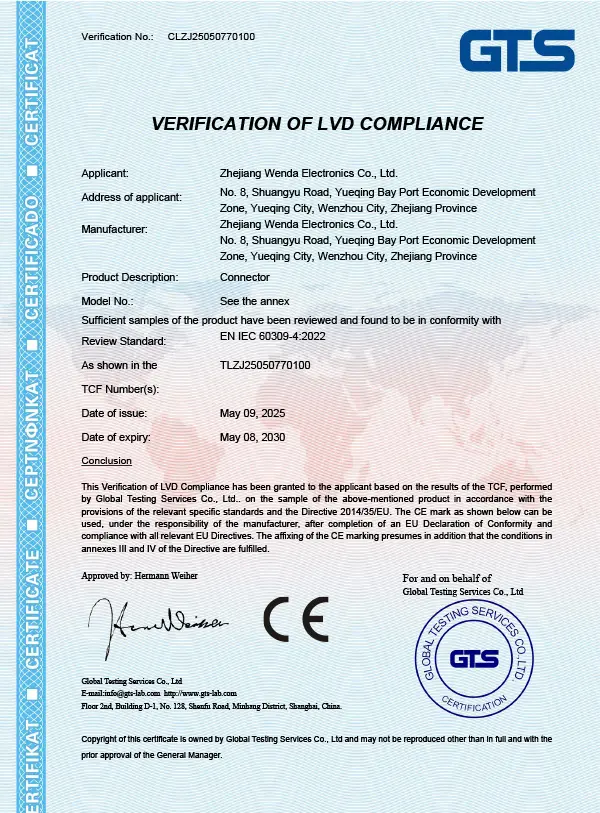
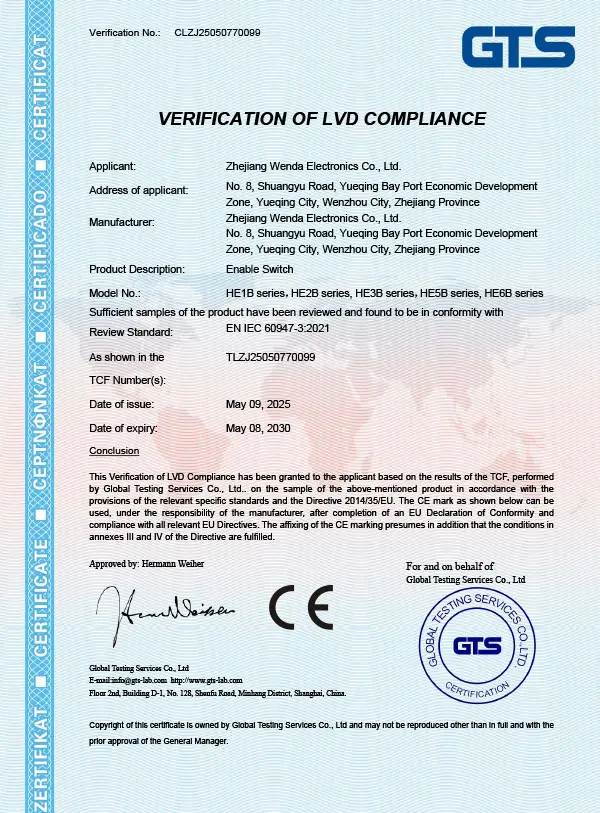
Wenda Electronics operates in strict compliance with globally recognized quality frameworks. We hold a complete portfolio of key certifications, proving our commitment to quality, environmental responsibility, and occupational safety:
Wenda Electronics is certified by leading international compliance bodies, ensuring a safe, sustainable, and reliable supply chain.
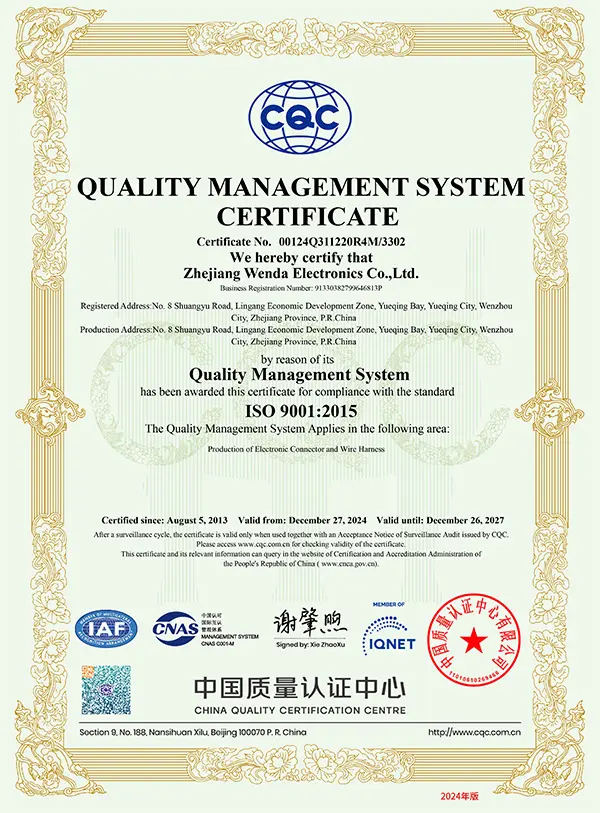
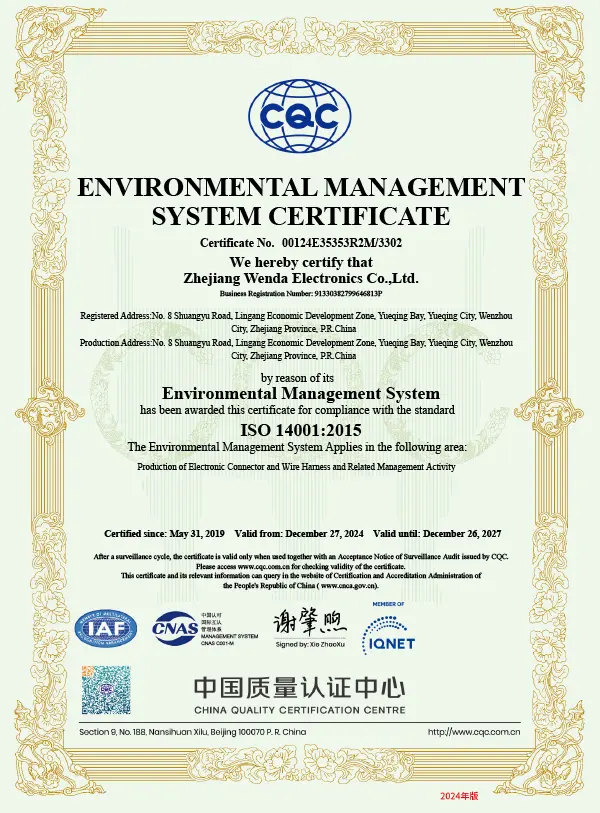
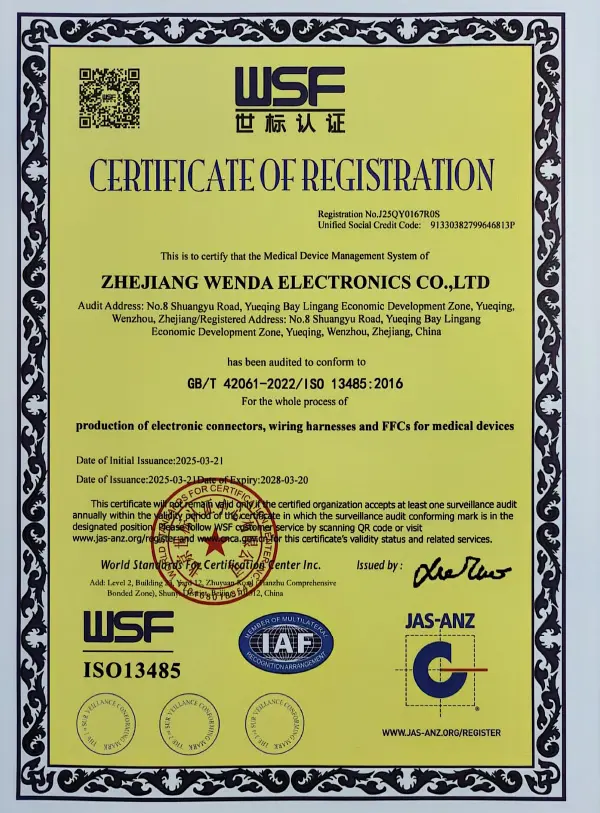
Expert technical answers to common integration, design, and manufacturing questions.
Zero Insertion Force (ZIF) sockets use a mechanical locking actuator (such as a flip-cover or slider drawer) to open the contact terminal path. This allows the FFC cable to be inserted with zero friction, preventing wear on the cable contacts. In contrast, Non-ZIF connectors use a friction-fit design. When the cable is inserted, the contacts slide directly against the terminals, creating high friction. Non-ZIF styles are typically more cost-effective but are best suited for applications with low mating cycles.
For high-vibration environments, we recommend utilizing side-latching FFC sockets with integrated locking clips or side notches. When the cable is inserted, these clips automatically lock into notches on the sides of the FFC cable, providing high mechanical retention. This prevents contact separation or signal loss under continuous vibrations.
For cost-sensitive applications with low mating cycles, tin plating (Sn over Ni) is a reliable and popular choice. However, for critical signal applications, high-durability devices, or harsh operating environments, gold plating (Au over Ni) is highly recommended. Gold plating prevents oxidation, ensures stable, low contact resistance, and prevents tin-whisker growth, which can cause electrical shorts in tight-pitch circuits.
Compatibility depends on four critical factors: First, the pitch must match exactly (e.g., a 0.5mm cable requires a 0.5mm socket). Second, the exposed cable thickness at the mating end must match the socket's insertion clearance (typically 0.3mm for 0.5mm pitch). Third, the pin configuration must align (top-contact, bottom-contact, or dual-contact). Finally, the pin count must match the socket's position count exactly.
High-integrity micro-connectors built for demanding signal transmission applications.