 Wenda Electronics
Wenda Electronics
Wenda Electronics
Engineered for low-profile, high-reliability board-to-board routing configurations.
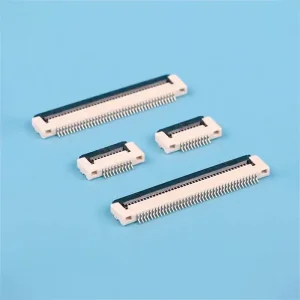
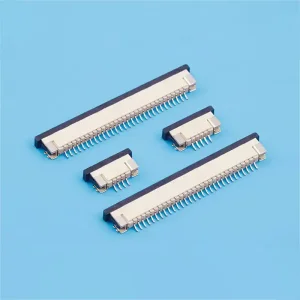
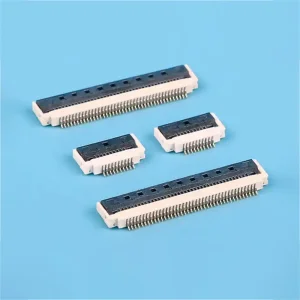
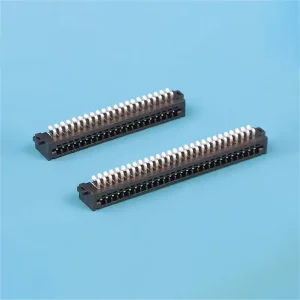
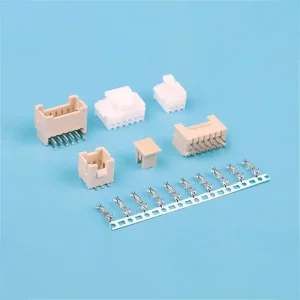
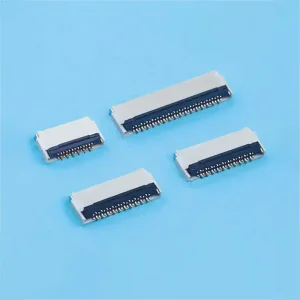
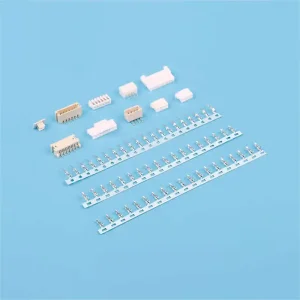
Exploring the mechanical, electrical, and commercial dynamics driving high-density interconnection systems.
The global demand for Flexible Flat Cables (FFC) and Flexible Printed Circuit (FPC) systems is undergoing exponential growth. As automotive electronics, high-definition display matrices, and medical robotics become more integrated, designers require micro-pitch, high-reliability cabling to navigate complex geometry while safeguarding signal integrity.
Modern communication links demand EMI-mitigated solutions. FFC suppliers must now offer specialized aluminum-polyester laminates, silver-paste grounding pads, and customized conductive fabric wraps to withstand high electromagnetic interference environments, particularly in multi-axis robotic joints and ADAS sensor arrays.
From the freezing conditions of aerospace avionics to the intense heat underneath automotive dashboards, premium FFC cables are fabricated using specialized insulation materials like Kapton (Polyimide) or high-grade PET, withstanding continuous operational cycles ranging from -40°C to +105°C and beyond.
As board-to-board spacing contracts below 1.5mm, traditional round-wire harness assemblies become mechanically obsolete. High-performance FFCs provide a flat, uniform profile that maximizes airflow, reduces overall chassis weight by up to 70%, and completely eliminates wiring routing errors during assembly lines.
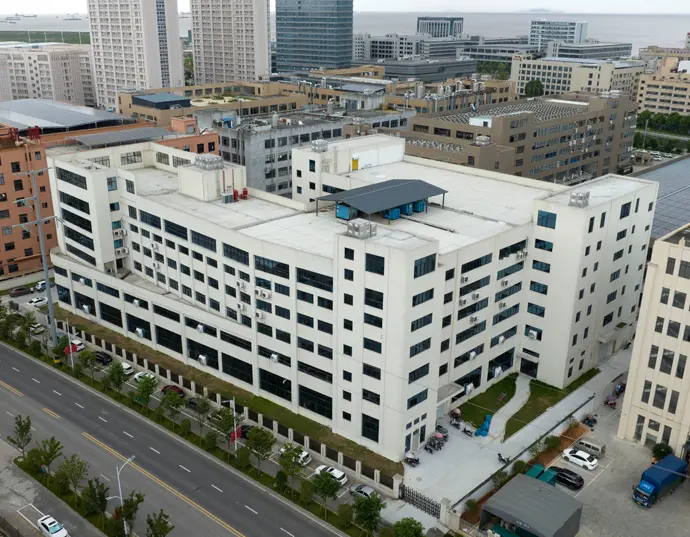
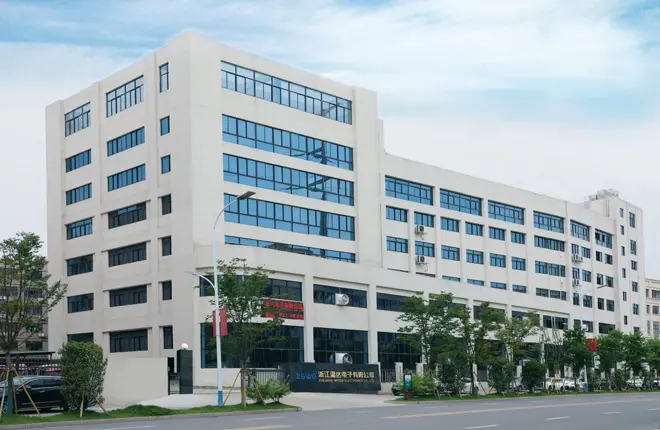
Zhejiang Wenda Electronics Co., Ltd. is located at the southern foot of the beautiful Yandang Mountain - Yueqing Bay Lingang Economic Development Zone, Yueqing City, Zhejiang Province. It is close to the 104 National Highway, next to the Ningbo-Taiwan-Wenzhou Expressway, and 50 kilometers away from Wenzhou Airport and Railway Station, close to the starting station of Wenzhou Light Rail Line S2. The logistics and transportation networks are exceptionally convenient.
Founded in March 2007, Wenda Electronics is a private joint-stock enterprise with more than 500 skilled employees. Our advanced manufacturing facility spans a footprint of over 10,000 square meters, with a total construction footprint exceeding 25,000 square meters.
The company integrates product research and development, manufacturing, and marketing, and can independently design and develop various types of precision electronic connectors, new energy connectors, electronic and automotive wiring harnesses, and custom FFC solutions. The plant operates high-speed precision punching machines, precision injection molding lines, fully automatic integrated assembly setups, FFC-automatic laminating and molding machinery, and CCD automated optical packaging systems.
Meeting stringent global standards for automotive, medical, industrial, and consumer applications.
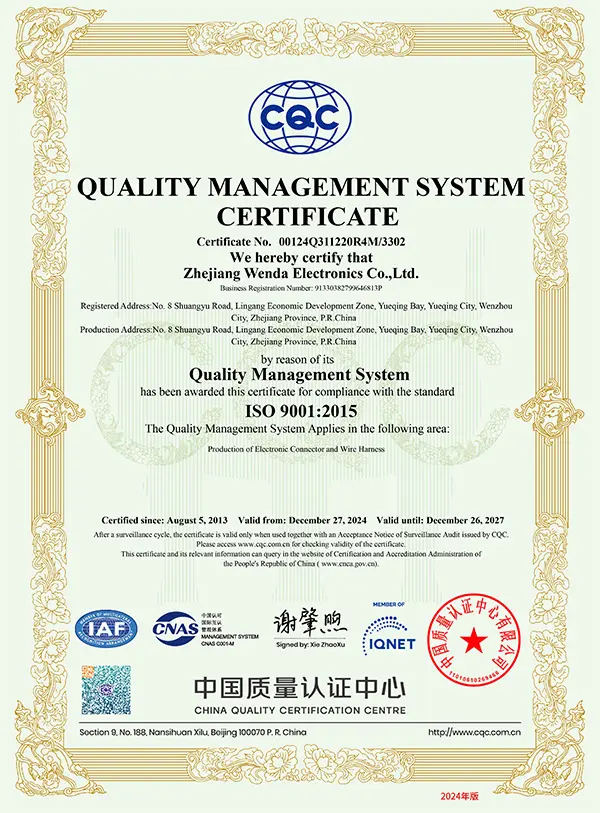
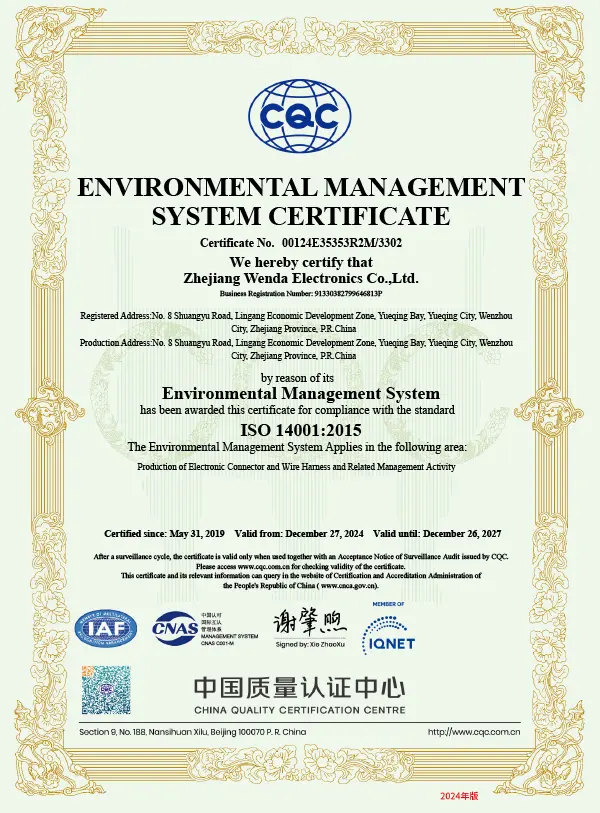
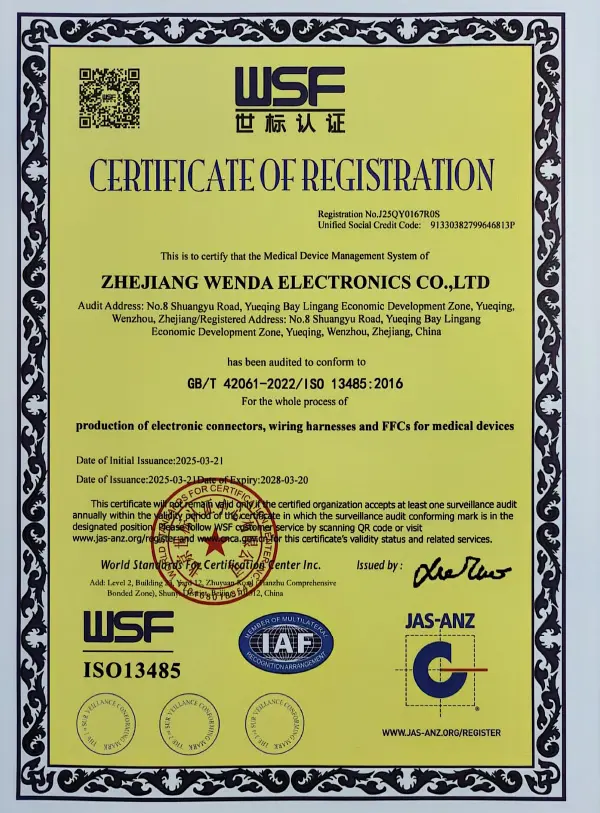
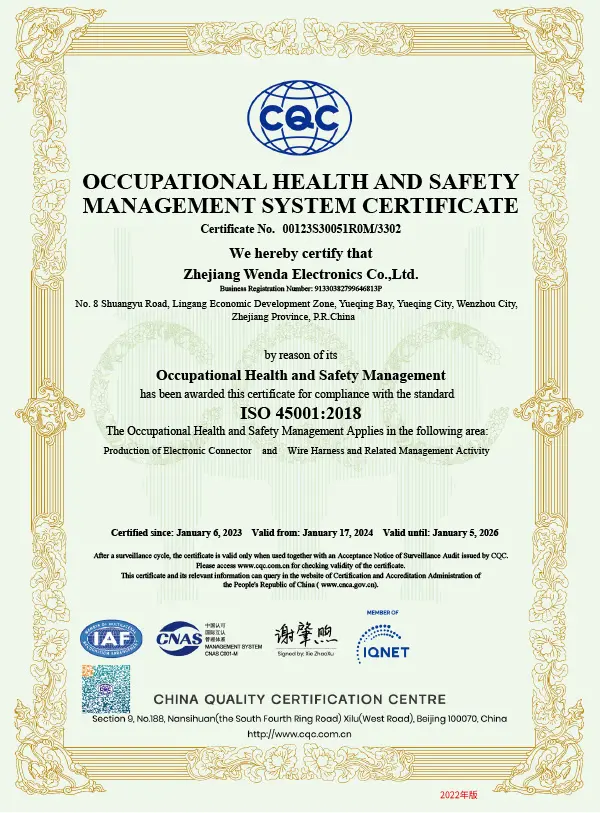
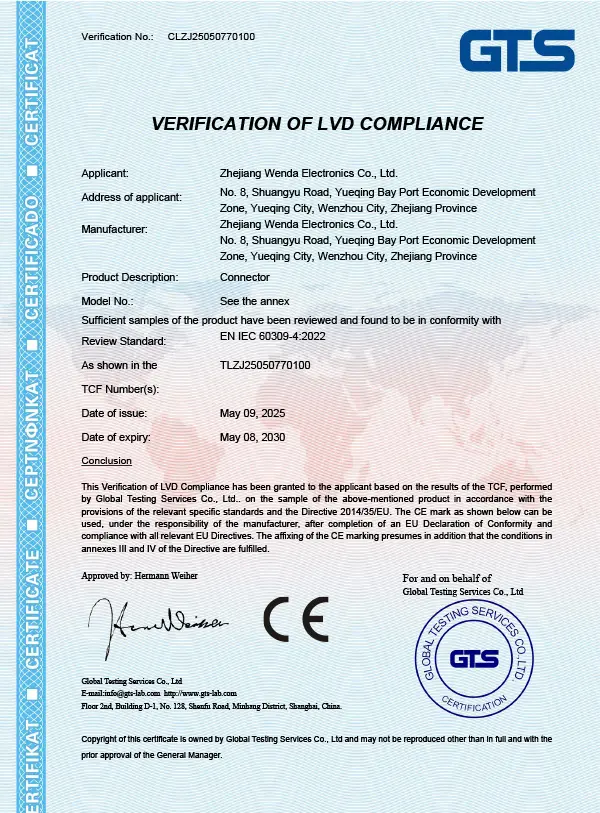
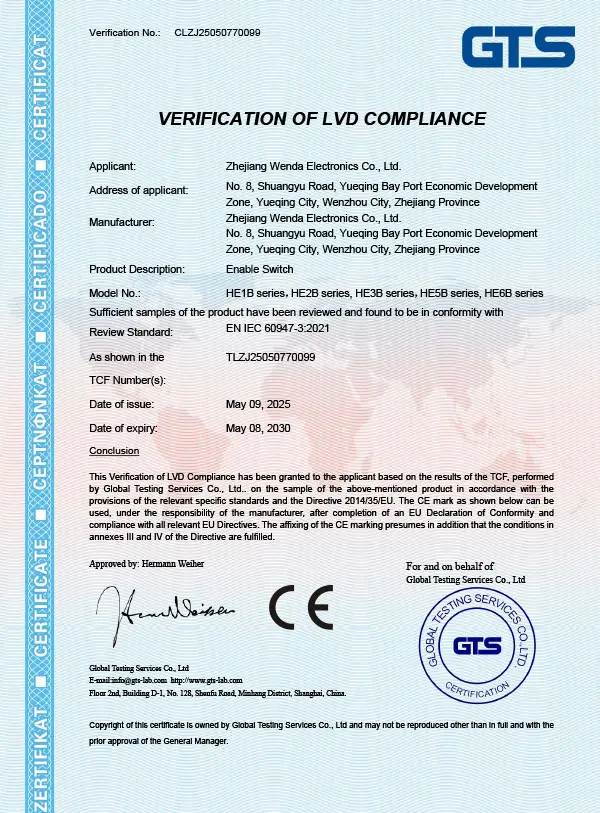
To align with strict global supply chains, our factory operations have passed ISO9001-2015 Quality Management, ISO14001-2015 Environmental Management, ISO45001-2018 Occupational Health & Safety, and IATF16949-2016 Automotive Quality Management certifications, alongside QC080000-2017 Hazardous Substances Process Management. Our output is certified by UL, CQC, and CE.
A look into our manufacturing excellence, advanced hardware configurations, and testing equipment.
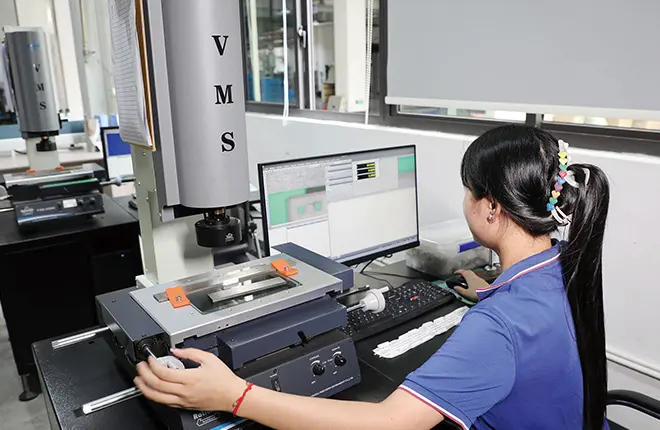
Our operators undergo regular precision training to handle micro-pitch connectors under dust-free environmental standards.
High-speed injection molders and Japanese-imported progressive stamping tools maintain tolerances within +/- 0.02mm.
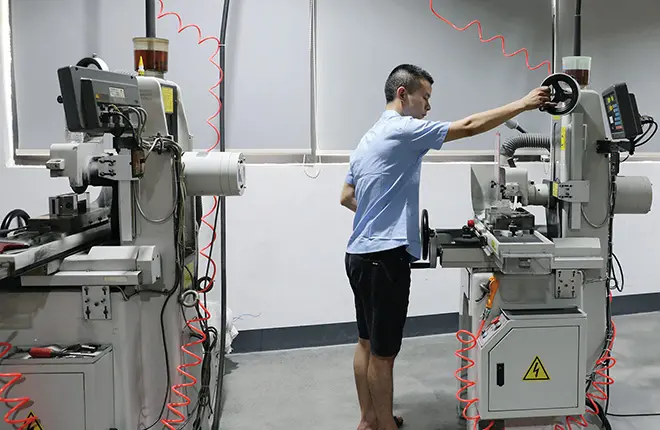
Equipped with thermal cycle chambers, salt spray systems, and automated optical scanners for zero-defect verification.
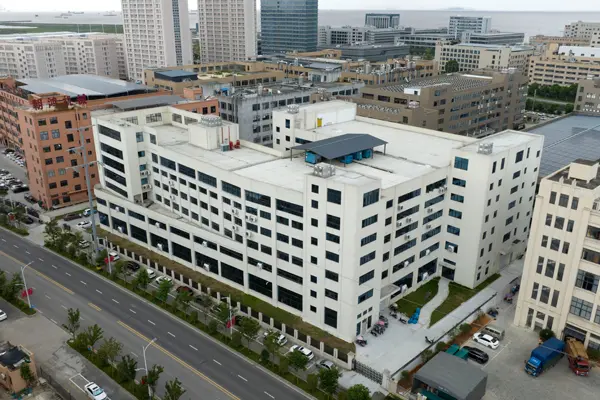
Located in Zhejiang's technology sector, facilitating rapid shipping pipelines to overseas sea and air terminals.
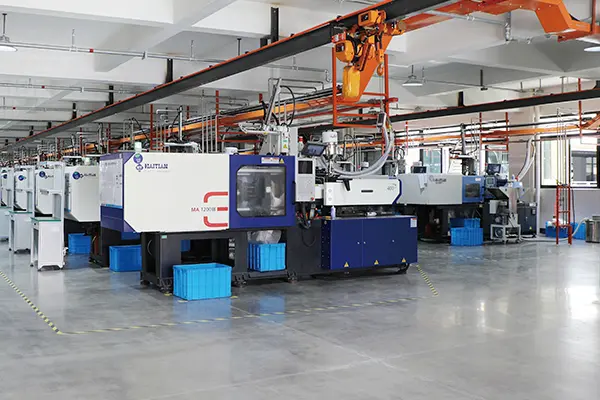
Fully integrated laminators structure conductors, adhesives, and base insulation films continuously, ensuring uniform electrical parameters.
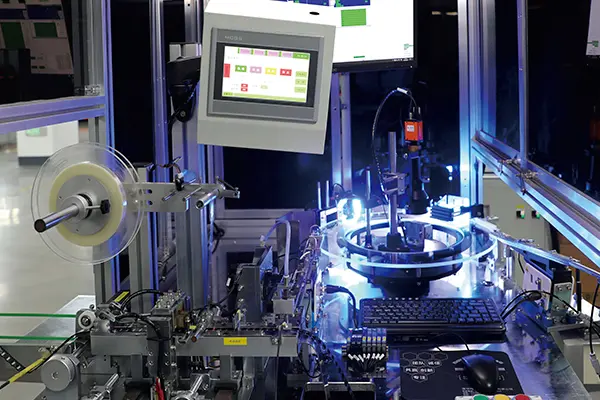
Dedicated climate-controlled storage areas isolate ready-to-ship inventory to prevent moisture intrusion or terminal oxidation.
Adapting flexible cabling technologies to solve structural challenges across diverse verticals.
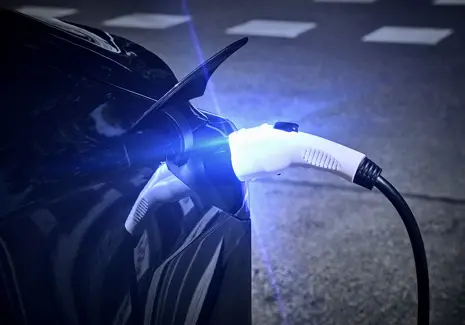
Modern battery management systems (BMS) and advanced driver-assistance systems (ADAS) require extremely reliable signal links. We deliver IATF16949-compliant FFC setups that withstand long-term vibrations, high current loads, and mechanical stress in tight dashboard assemblies.
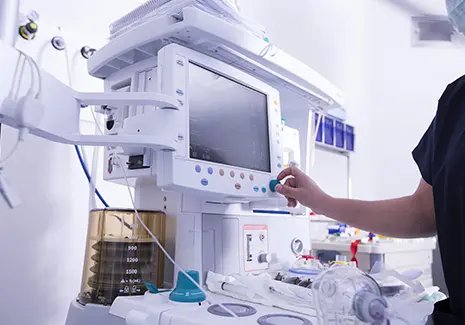
Surgical endoscopes, wearable patient monitoring arrays, and high-frequency ultrasound devices depend on noise-free electrical signals. Our shielded FFC solutions provide high signal fidelity, flexible bio-compatible coatings, and modular design configurations to fit tiny paths.

With smart devices shrinking, folding displays and high-refresh-rate laptop screens require ultra-thin connectors. Our 0.3mm and 0.5mm pitch FFC systems offer flip-lock mechanisms that prevent contact displacement during mechanical shock or drop events.
How Wenda Electronics is preparing for next-generation signal transmission technologies.
1. Ultra-Fine Pitch Architectures (Below 0.3mm): As silicon designs grow more dense, the requirement for board-to-board connections is shifting from 0.5mm pitch to 0.3mm and smaller. Our R&D is currently perfecting continuous roll-to-roll etching processes to manufacture reliable 0.2mm pitch FFC lines that can route hundreds of IO points within a 20mm chassis width.
2. High-Speed Data Transfer (10 Gbps+ & USB4 Compliance): Standard FFCs have historically been restricted to low-frequency display or peripheral control links. By introducing impedance-controlled micro-strip design principles and advanced low-loss dielectric layers (LCP), our next-generation FFC prototypes successfully transmit high-speed data protocols like PCIe Gen 4 and USB 4, bypassing expensive coaxial options.
3. Dynamic Flex Bending Lifespans (10 Million+ Cycles): In applications like robotic arm tooling, security camera pans, and folding mobile device hinges, traditional cables face copper trace fatigue and fracturing. We have introduced highly annealed copper conductors combined with modified elastomer isolation films, raising the dynamic cycle lifespan beyond 10 million cycles under extreme 180-degree bending radii.
Answers to engineering, sourcing, and implementation questions from our technical specialists.
Flexible Flat Cable (FFC) typically refers to any flat cable made of flat copper conductors laminated between two layers of polyester insulation film. It is direct and designed for straight board-to-board connections. Flexible Printed Circuits (FPC) are actual printed circuit boards that are flexible, utilizing photolithography to pattern custom circuitry on polyimide films. FPC can integrate surface-mount components (SMT), traces, and multi-layer patterns, whereas FFC is primarily used for direct connection paths.
Unshielded flat cables are vulnerable to external electromagnetic interference (EMI) and can emit noise that degrades adjacent circuits. We apply aluminum foil, conductive fabrics, or printed silver paste shield coats over the insulation layer. This shielding redirects EMI currents to ground pins, ensuring low noise floor ratios and compliance with global EMC standards like CISPR 25.
Tin Plating is ideal for standard consumer electronics, offering a cost-effective path with reliable connectivity under typical ambient conditions. Gold Plating is specified for environments with high humidity, chemical exposure, or critical low-voltage signals where contact resistance must remain minimal (typically below 20mΩ) over decades of field service. Gold plating prevents oxidation and whisker growth, which are major failure modes in automotive systems.
Industrial components must comply with environmental laws. Wenda products are certified under UL (Underwriters Laboratories) for flame retardance (e.g., VW-1 test rating), and comply with European RoHS and REACH limits to eliminate lead, mercury, and flame-retardant polybrominated biphenyls from electronic assembly materials.
Yes, FFC cables can be configured to carry power by widening the conductor pitch and increasing the copper thickness (e.g., using 0.1mm or thicker foil). However, thermal dissipation must be carefully modeled. Combining power and high-speed data on the same cable requires physical separation or layout designs to prevent heat from affecting impedance characteristics.
Select high-performance components manufactured at our ISO-certified facilities.