
Wenda Electronics Wenda Electronics

What Is a Flexible Flat Cable Used For?

Time:2026-09-24 Author:Sienna
0%

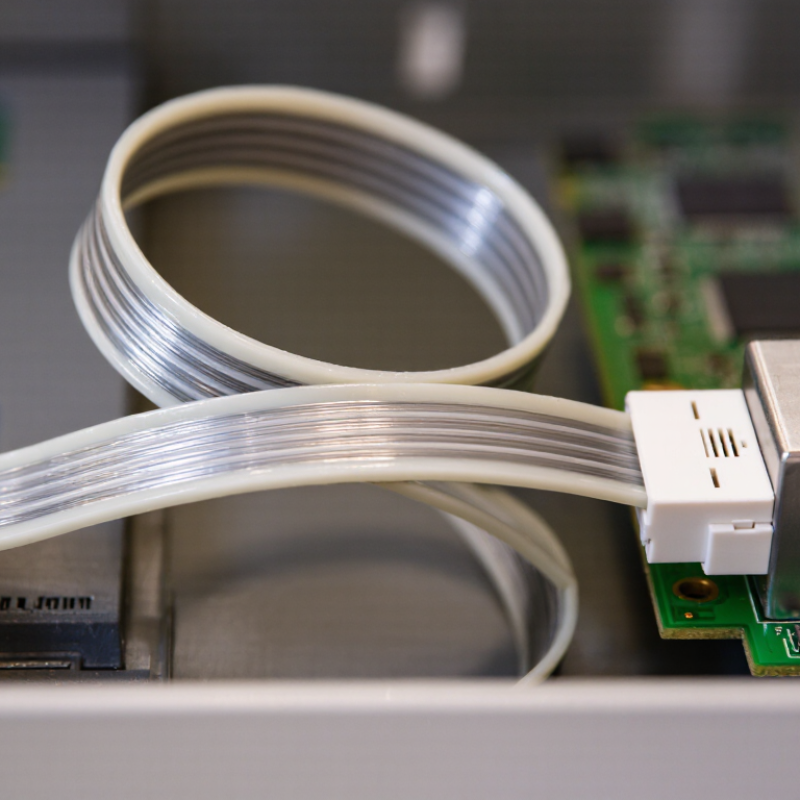
A Flexible Flat Cable (FFC) is a thin, flat assembly of parallel conductors, usually insulated with a flexible polymer film. It carries signals or power between compact electronic components. Inside a printer, for example, an FFC can link a moving printhead to the main circuit board. In a laptop, it may connect the keyboard, display, or touchpad. Its flat profile helps engineers route connections through narrow spaces where round wires would be bulky.

Demand for smaller, connected devices makes these interconnections increasingly relevant. IDC reported that global smartphone shipments reached about 1.24 billion units in 2024, a 6.4% increase from 2023. The International Energy Agency’s Global EV Outlook 2024 also estimated nearly 14 million electric car sales in 2023, with growth continuing into 2024. These figures describe markets that rely on dense electronic assemblies; they do not measure FFC use directly. That distinction matters. An industry trend is not proof of a cable’s market share.

This guide explains what FFCs do, where they are commonly used, and how their design suits compact equipment. It also considers pitch, conductor count, bend limits, and connector compatibility. Small details matter. A cable that fits the space may still fail if repeatedly bent beyond its design limits. Engineers should check the equipment specification and manufacturer’s datasheet before choosing one. Even then, routing can be less tidy in a real product than it looks in a diagram.
What Is a Flexible Flat Cable Used For?

FFC Structure and Common Contact Pitches: 0.5, 1.0, and 1.25 mm

A flexible flat cable, or FFC, uses parallel copper conductors laminated between thin insulating films. The flat shape suits tight spaces where round wires may bend awkwardly. At each end, exposed contact fingers connect to a matching connector, often through a zero-insertion-force latch. Simple in appearance. Yet the contact pitch—the distance from the center of one conductor to the next—must match the connector precisely.

A 0.5 mm pitch packs many contacts into a narrow space, making it useful in compact displays, cameras, and control panels. Its fine contacts need careful alignment and clean assembly. A 1.0 mm pitch offers more room between conductors and is common when designers need a practical balance between size and handling. The 1.25 mm option provides still wider spacing, which can make inspection and connection easier in less cramped layouts. These are common choices, not universal standards for every device.

Pitch alone does not confirm compatibility. Check the conductor count, exposed-contact side, cable length, and connector orientation against the equipment drawing. A cable can look right and still face the wrong way. That detail is easy to miss. Also consider bend direction and available space before installation; repeated sharp folds may damage conductors, even when the cable seems flexible.

Flexible Flat Cable (FFC): Structure and Common Contact Pitches

How to read the chart: Contact pitch is the center-to-center distance between adjacent conductors. The values shown are common FFC pitch options; the appropriate pitch depends on the connector and device design.

FFC structure and uses: An FFC typically consists of parallel flat copper conductors laminated between insulating polymer films, with exposed contacts at one or both ends. Its thin, flexible construction helps connect components in space-constrained electronics, such as displays, printers, cameras, and other compact devices.

How FFCs Connect Displays, Keyboards, Cameras, and Other Components

A flexible flat cable (FFC) carries signals and power through a thin, ribbon-like strip of parallel conductors. Its flat shape helps connect a display panel to a control board when a round cable would crowd the hinge or enclosure. In a laptop, for example, the cable may pass through a narrow hinge channel, with a small stiffened end sliding into a zero-insertion-force connector. Secure seating matters. A slightly skewed cable can cause flickering, missing image lines, or an unresponsive screen.

FFCs also link keyboards, touchpads, cameras, and sensors to circuit boards. Their closely spaced conductors suit compact layouts, while defined contact counts and pitches help engineers match cables to connectors. The International Electrotechnical Commission’s IEC 60189-3 specification covers flat PVC-insulated cables, including construction and test methods; it offers useful context for cable design, though product requirements still depend on the device. The broader flexible-circuit market is growing: Grand View Research estimated its global value at about $15.3 billion in 2023. That figure covers flexible printed circuits, not FFCs alone, so it should not be treated as an FFC market estimate. FFCs are practical, but not magic. Repeated bending, poor strain relief, or contamination at the contacts can still cause failures.

What Is a Flexible Flat Cable Used For? - How FFCs Connect Displays, Keyboards, Cameras, and Other Components

Application What the FFC Connects Typical Signals or Uses Why an FFC Is Suitable Key Design Considerations
Displays A display panel to a controller board or main circuit board Video data, control signals, and sometimes power or backlight connections Its flat profile can fit into compact enclosures and narrow spaces. Match the pin count, pitch, contact orientation, and electrical requirements. High-speed display signals may require controlled impedance and careful routing.
Keyboards and control panels A key matrix, button board, or touch-control board to a main board Key-row and key-column signals, button inputs, and touch-panel connections Multiple conductors can be routed together in a thin, lightweight cable. Check contact direction and cable length. Avoid sharp creases and repeated bending unless the cable is specified for dynamic flexing.
Cameras and imaging modules A camera sensor or module to an image-processing board Image data, clock, control, and power signals, depending on the interface It can connect closely spaced boards in small devices with limited room for wiring. Confirm the connector and interface requirements. Fast differential signals can be sensitive to cable layout, length, and electromagnetic interference.
Printers and scanners A moving printhead, scanner assembly, or sensor board to control electronics Control, sensor, and data signals; some designs use the cable in a moving assembly. The flat shape can follow a compact path through an equipment enclosure. For motion, use a cable rated for the required flex life and bend radius. A standard static-use FFC may not withstand repeated movement.
Storage and peripheral modules A compact module or daughterboard to a main board Power, control, and data signals, subject to the system interface It provides a low-profile connection where a bulky wire harness is inconvenient. Verify current capacity, signal requirements, pin mapping, and secure connector retention for the intended application.
Appliances and embedded controls A sensor, indicator, or user-interface board to a control board Low-voltage control, status, and sensor signals It helps organize connections in space-constrained electronic assemblies. Select insulation and temperature ratings appropriate to the environment, and keep the cable away from abrasion, excessive heat, and sharp edges.

FFCs are flat, insulated cables with parallel conductors, commonly used for compact board-to-board connections. Actual suitability depends on the cable, connector, electrical interface, and mechanical environment.

Space-Saving Design: Flat Profiles for Compact, High-Density Devices

A flexible flat cable saves space by spreading conductors across a thin, wide strip instead of bundling them into a round wire harness. This profile can fit beneath a display, through a hinge, or between closely stacked circuit boards. In a compact camera module, for example, a flat cable can follow the housing wall while leaving the center clear for the lens and moving parts. It bends along a defined route. It does not need a wide turning arc.

The market reflects the value of flexible interconnects in compact electronics. Grand View Research estimated the global flexible printed circuit board market at about US$20.4 billion in 2023, with continued growth projected through 2030. That figure covers a broader product category than flexible flat cables alone, so it should not be read as cable-market revenue. Still, it points to sustained demand for thin, adaptable connections. In dense devices, each millimeter matters. A flat cable can reduce routing height and simplify assembly, but only when its bend radius, conductor spacing, and insulation suit the application. Too-tight folds can fatigue conductors over time. The profile looks simple; the mechanical details are not.

Bend-Life and Routing: Why Flex-Cycle Ratings Depend on Cable Design

A flexible flat cable is useful when signals or power must pass through a narrow, moving space. Its thin, parallel conductors can fit inside a printer carriage, folding display, or compact appliance. But a cable’s ability to bend is not a simple yes-or-no feature. The stated flex-cycle rating depends on how the cable is built and how it is installed.

Conductor thickness, copper type, spacing, insulation, and bonding all affect fatigue. So does the bend radius: a tight fold concentrates strain near the same point on every movement. A wider, controlled curve spreads that strain. Routing matters just as much.

If the cable twists, rubs against a sharp edge, or is pulled taut at either end, its service life may fall short of the test rating. Leave enough slack for movement, secure the ends, and keep the cable aligned with its intended bend direction. Small details matter.

Cycle ratings usually come from defined test conditions, not every real machine. A cable tested in a smooth, guided path may behave differently in a warm enclosure with vibration. Check the supplier’s bend-radius guidance and test setup, then compare them with the actual motion and environment. I have seen neat routing treated as an afterthought; that can be an expensive assumption. The honest answer is that no rating guarantees a fixed lifespan without matching the installation.

Selecting an FFC: Pitch, Pin Count, Length, Current, and Temperature Ratings

Flexible flat cable selection starts with matching pitch and pin count to the connector. Pitch is the distance between adjacent contacts; even a small mismatch can prevent proper seating. Count every circuit, including grounds and unused positions. Check the connector drawing, not just the cable’s appearance. A close fit is not always a correct fit.

Length affects more than routing. A longer cable can increase resistance, voltage drop, and susceptibility to noise, especially on low-voltage signals. IPC-2221B provides an empirical current-capacity equation for printed-circuit conductors, but it is not a rating for FFCs. Use it only as background; the cable’s own datasheet should specify conductor resistance and allowable current. Keep the route short where practical. Measure the actual installed path, including bends and service loops.

Current and temperature ratings must be considered together. Higher current creates heat, while nearby components and tight enclosures can reduce cooling. IEC 60512 describes connector test methods, but passing a connector test does not establish the complete cable assembly’s operating limit. Compare the cable’s rated temperature with the equipment’s worst-case ambient temperature, then check any derating guidance. I have seen “room temperature” assumptions missed in compact layouts. They are easy to overlook. A little margin helps.

FAQS

What is a flexible flat cable?

It is a thin strip containing parallel copper conductors between insulating films. Its flat shape fits narrow spaces better than round wires.

What does cable pitch mean?

Pitch is the center-to-center distance between neighboring conductors. Common options include 0.5 mm, 1.0 mm, and 1.25 mm.

When is a 0.5 mm pitch useful?

A 0.5 mm pitch fits many contacts into a narrow connector. It suits compact displays, cameras, and control panels.A little alignment matters.

Why might someone choose a 1.0 mm pitch?

A 1.0 mm pitch provides more spacing than 0.5 mm. It balances compact size with easier handling and inspection.

What makes a 1.25 mm pitch different?

Its wider spacing can simplify inspection and connection in less crowded layouts. It may need more physical space inside the device.

Does matching the pitch guarantee compatibility?

No. Check conductor count, cable length, contact side, connector orientation, and bend direction.A cable can look correct.

How do these cables connect displays and keyboards?

Exposed contact fingers slide into a matching connector, often with a locking latch. Proper seating helps prevent flickering or missing signals.

Can flexible flat cables bend repeatedly?

They can follow controlled routes through hinges or tight enclosures. Sharp, repeated folds may fatigue the conductors over time.

What should be checked before installation?

Compare the cable with the equipment drawing. Confirm its length, contact direction, pitch, and connector orientation.Also inspect the contacts.

What problems can contamination or poor seating cause?

Dirt or skewed insertion can interrupt power or signals. A screen may flicker, or a keyboard may stop responding.

Are flexible flat cables always the best space-saving choice?

Not always. They save routing height, but the bend radius, insulation, spacing, and connector must suit the application.The profile looks simple.

Conclusion

A Flexible Flat Cable (FFC) is a flat, lightweight cable designed to connect components in compact electronic devices. Its parallel conductors are laminated between thin insulating layers, with contact pitches commonly including 0.5, 1.0, and 1.25 mm. FFCs carry signals and power between displays, keyboards, cameras, and other components, while their low-profile shape helps save space and supports dense internal layouts.

Choosing an FFC involves more than matching its connector. Consider the required pitch, pin count, cable length, current capacity, and operating temperature. Routing and bending needs also matter: flex-cycle performance depends on the cable’s construction and how sharply or frequently it is bent. Selecting a cable suited to the device’s electrical, thermal, and mechanical conditions can help ensure a reliable connection throughout its intended use.

Sienna

Sienna

Sienna is a skilled marketing professional with a deep expertise in our company’s core products and services. With a passion for innovation and detail, she plays a pivotal role in crafting insightful blog posts that not only highlight the unique features of our offerings but also provide valuable......