Wenda Electronics
China is now a major manufacturing base for Electrical Connectors used in vehicles, data centers, appliances, and industrial equipment. The opportunity is substantial, but supplier quality varies widely.
MarketsandMarkets estimates that the global connector market will grow from approximately USD 84.7 billion in 2024 to USD 113.9 billion by 2029. Grand View Research also identifies automotive, telecommunications, and consumer electronics as important growth sectors. China benefits from dense supply chains, large production capacity, and strong tooling expertise. These advantages can shorten development cycles and support competitive pricing.
Ron Bishop, founder of Bishop & Associates, described connectors as “the plumbing of electronics.” The comparison is practical. A connector may look small, yet poor contact force, weak plating, or inaccurate molding can interrupt an entire system. That detail matters.
This guide examines leading Chinese Electrical Connectors manufacturers through product range, materials, testing, customization, and application experience. ISO 9001 certification, RoHS compliance, UL recognition, and documented electrical testing should influence supplier evaluations. However, certificates alone do not prove consistent production quality. Buyers should request inspection records, current datasheets, sample testing, and traceability information.
Industry reports use different market definitions, so their figures are not perfectly comparable. That limitation deserves attention. A lower price may also hide tooling changes, unstable plating thickness, or limited after-sales support. The strongest suppliers combine engineering support with repeatable manufacturing. They also explain weaknesses clearly. That is often more valuable than a polished catalog.
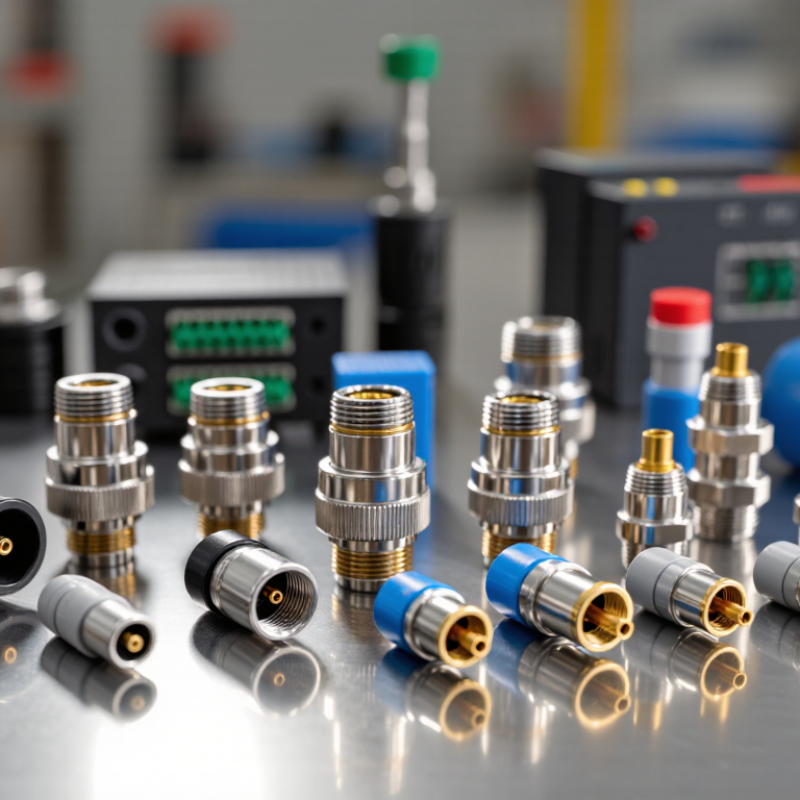
China-made electrical connectors cover many designs for different working conditions. Wire-to-wire connectors suit harnesses, control panels, and low-voltage equipment. Wire-to-board connectors fit compact devices and printed circuit boards. Board-to-board types support dense circuit layouts in industrial controllers and communication equipment. Terminal blocks remain practical for fixed wiring and easy maintenance. Circular connectors serve sensors, robotics, and outdoor machinery. Waterproof versions are common in vehicles, lighting systems, and agricultural equipment.
Manufacturers in China also produce coaxial connectors for signal transmission and high-current connectors for batteries and power systems. Each type needs careful matching. Check rated voltage, current, contact resistance, insulation material, and operating temperature. In production audits, I have seen small housing errors cause loose contacts and intermittent faults. That detail is easy to underestimate. Connector performance also depends on plating thickness, locking structure, cable size, and assembly quality. Test samples under vibration, moisture, and repeated mating conditions. IEC-based reports and traceable inspection records can support more reliable purchasing decisions.
Tips: Ask for drawings, material certificates, and test data before approval. Confirm whether the connector fits your cable and installation space. Do not rely only on appearance. A bright metal surface may still perform poorly. Sample testing is wise, although it adds time and cost. Leave space for service access, especially in control cabinets. Some projects need customization, but unnecessary changes can increase defects and delay delivery.
What Are the Top Electrical Connectors from China?
Material selection often separates dependable connectors from attractive but unreliable products. Many industrial connectors use copper or copper alloy contacts because these materials conduct current efficiently and maintain useful spring force. Brass offers strength, while phosphor bronze performs well under repeated insertion. Tin plating suits general applications. Gold or nickel plating may be considered for corrosion resistance and stable low-current performance.
Insulating housings commonly use engineering plastics such as PA66 or PBT. These materials should tolerate heat, moisture, vibration, and mechanical stress. Flame-retardant grades tested to UL 94 can reduce fire risk, but the exact grade must match the application. Small details matter. Contact thickness, plating coverage, crimp height, and terminal alignment can change field performance. A connector may pass visual inspection and still fail after thermal cycling.
Manufacturers with strong quality systems usually control incoming materials, mold dimensions, crimp force, and electrical resistance. ISO 9001 supports process consistency, while IATF 16949 may apply to automotive supply chains. IEC 61984 can guide connector safety and testing requirements. RoHS and REACH compliance also helps buyers manage restricted substances and supply-chain documentation. Testing should include mating cycles, insulation resistance, dielectric strength, vibration, and temperature exposure. Testing is not optional. From factory audits, I have found that records can look complete while sampling remains too narrow. That weakness deserves review. Buyers should request traceable test reports, material certificates, and clearly defined acceptance limits before approving production.
China’s electrical connector market covers several practical categories for industrial and commercial equipment. Wire-to-board connectors support compact control panels and sensor assemblies. Board-to-board products fit automation equipment where space is limited. Terminal blocks remain common in power distribution cabinets because technicians can inspect each connection quickly. Circular connectors, including waterproof versions, serve motors, outdoor lighting, and factory sensors. Automotive-style sealed connectors are also used in vehicles, battery systems, and mobile machinery.
Product selection should follow the working environment, not only the catalog photo. Check pitch, rated current, voltage, contact material, and cable range. For wet areas, examine the IP rating and sealing structure. A connector marked IP67 still needs correct assembly.
Small mistakes matter. In sourcing inspections, useful tests include contact resistance, mating cycles, vibration, thermal cycling, and salt-spray exposure. Documentation should identify materials, production lots, inspection records, and applicable IEC, UL, RoHS, or REACH requirements.
Coaxial connectors support signal transmission in communication and measurement equipment. Push-in and quick-lock designs can reduce installation time, but they may not suit heavy vibration. I have found that low-cost samples sometimes perform well initially, while their plating thickness varies between batches. That detail deserves attention. Request dimensional drawings, tolerance data, and independent test reports before approving a large order. A reliable supplier should explain mold control, terminal plating, and corrective actions clearly, rather than promising universal compatibility.
When sourcing electrical connectors from China, evaluate more than metal finish or low pricing. Common choices include screw terminal blocks, wire-to-board headers, waterproof circular connectors, and crimp terminals. My practical checks begin with the application. Confirm conductor size, current, voltage, temperature, vibration, and moisture exposure. A connector that looks strong may fail under heat. Ask for drawings, material specifications, and test records. Do not rely on photographs alone.
Quality starts with contact materials, plating thickness, housing plastic, and crimp consistency. Request samples from regular production, not only hand-selected units. Measure terminal retention with a pull test. Inspect crimp height under magnification. Check insulation for cracks after bending and temperature cycling. Safety needs evidence. Review insulation resistance, dielectric withstand, and ingress protection results where applicable. Look for traceable batch numbers and controlled assembly records. Certification marks deserve verification through the issuing body. Paperwork can be incomplete.
Compatibility is often the overlooked risk. Confirm pin layout, mating dimensions, locking direction, keying, wire-entry space, and sealing performance. Test the connector with the exact cable and enclosure. In one evaluation, a connector fitted correctly but loosened during vibration because the latch had too much play. I also approved a sample before checking tooling changes. That mistake still matters. Repeat testing after design or material changes. Leave clearance for gloves and maintenance. Small details matter.
| Connector Category | Typical Applications | Typical Electrical Range* | Key Quality Indicators | Safety and Compliance Checks | Compatibility Checks | Recommended Selection |
|---|---|---|---|---|---|---|
| PCB Terminal Blocks | Control panels, industrial automation, power distribution, and instrumentation. | Approximately 2–41 A and 150–600 V AC/DC, depending on pitch, conductor size, and construction. | Secure screw or spring clamping, low contact resistance, uniform plating, accurate pitch, and reliable wire retention. | Check insulation flammability, touch protection, creepage and clearance distances, temperature rating, and relevant terminal-block standards. | Match pitch, PCB hole pattern, wire-entry direction, conductor cross-section, pole count, and rated voltage. | Choose spring-clamp versions for vibration and screw-clamp versions where field adjustment is required. |
| Wire-to-Board Headers and Housings | Consumer electronics, LED equipment, appliances, industrial controls, and internal device wiring. | Commonly 1–5 A per contact and up to approximately 250 V, subject to contact size and spacing. | Consistent terminal retention, accurate mating force, straight pins, stable polarization, and good crimp formation. | Verify insulation material, flame rating, temperature range, current derating, and protection against incorrect insertion. | Confirm pitch, row arrangement, pin count, keying, contact gender, mating height, and PCB footprint. | Use positive-locking housings for equipment exposed to movement, vibration, or repeated service. |
| Circular Industrial Connectors | Sensors, motors, machine tools, factory automation, outdoor equipment, and power or signal distribution. | Approximately 2–30 A per contact and 30–600 V, depending on size, contact layout, and application. | Reliable locking mechanism, stable sealing gasket, durable shell, smooth mating, and corrosion-resistant contacts. | Check IP rating, dielectric withstand, insulation resistance, grounding continuity, cable clamping, and environmental temperature rating. | Match shell size, keyway, pin layout, coupling method, cable diameter, contact type, and mounting dimensions. | Select sealed versions for dust, water, oil, or coolant exposure; verify the IP rating after cable assembly. |
| Rectangular Heavy-Duty Connectors | Industrial machinery, robotics, production lines, power cabinets, and detachable equipment connections. | Often 10–100 A per contact and up to approximately 1,000 V, depending on the insert and contact system. | Strong housing, effective cable strain relief, secure locking levers, modular inserts, and repeatable contact alignment. | Evaluate protective bonding, ingress protection, creepage and clearance, mechanical impact resistance, and temperature performance. | Confirm hood and housing size, insert type, contact arrangement, cable exit direction, mounting method, and mating accessories. | Use modular inserts when power, control, pneumatic, and data circuits must share one protected interface. |
| Automotive Sealed Connectors | Vehicle harnesses, lighting, sensors, engine compartments, battery systems, and mobile equipment. | Typically 5–40 A per contact and up to approximately 60 V DC for low-voltage vehicle circuits. | Terminal retention, secondary locking, stable crimp height, silicone seals, vibration resistance, and controlled contact force. | Check sealing performance, temperature cycling, vibration durability, chemical resistance, short-circuit protection, and flammability. | Match cavity layout, terminal series, wire gauge, seal size, polarization, secondary lock, and mating half. | Require crimp cross-section inspection and pull-force testing for safety-critical vehicle harnesses. |
| Coaxial RF Connectors | Wireless equipment, antennas, measurement instruments, networking devices, and radio-frequency modules. | Commonly designed for 50 Ω or 75 Ω systems, with frequency capability ranging from low MHz to several GHz depending on the connector type. | Controlled impedance, low insertion loss, high shielding effectiveness, accurate center contact, and consistent plating. | Verify dielectric withstand, insulation resistance, RF leakage, temperature range, and mechanical retention. | Match impedance, interface type, gender, coupling mechanism, cable diameter, frequency range, and PCB mounting pattern. | Use test data for return loss and insertion loss rather than relying only on the connector appearance. |
| USB, Data, and Modular Communication Connectors | Computers, industrial control systems, charging equipment, networking devices, and data interfaces. | Power capability and data speed depend on the exact interface generation, cable construction, contact design, and device configuration. | Accurate contact geometry, shield continuity, insertion-cycle durability, controlled impedance, and reliable latch performance. | Check ESD protection, dielectric strength, grounding, temperature rise, shielding, and applicable interface specifications. | Confirm connector generation, pin assignment, receptacle orientation, cable capability, mounting footprint, and mechanical keying. | Test the complete cable-and-device assembly because connector capability alone does not guarantee system speed or charging performance. |
| High-Current Battery and Power Connectors | Energy storage systems, power tools, material-handling equipment, inverters, and battery packs. | Commonly 30–300 A DC, depending on contact size, conductor cross-section, duty cycle, and cooling conditions. | Low and stable contact resistance, strong terminal retention, anti-rotation features, robust housing, and effective cable strain relief. | Evaluate temperature rise, DC arc behavior, touch protection, polarity protection, short-circuit performance, and insulation resistance. | Match cable size, polarity, contact arrangement, mating force, mounting space, voltage class, and required pre-charge or auxiliary contacts. | Select a connector with verified continuous-current data, not only a short-duration peak-current claim. |
*The electrical ranges are representative industry ranges, not universal ratings. Always confirm the manufacturer’s datasheet, derating curves, test reports, applicable standards, and the complete cable or equipment assembly before purchase.
What Are the Top Electrical Connectors from China?
Choosing the Right Chinese Connector Supplier
Choosing a Chinese connector supplier requires more than comparing unit prices. In practical sourcing, the connector type must match the application. Common options include wire-to-board connectors, circular connectors, terminal blocks, and sealed automotive connectors. Each has different requirements for current, vibration, temperature, and moisture.
Ask for complete technical documents before ordering samples. These should include drawings, contact materials, plating thickness, insulation ratings, and test methods. A reliable supplier should explain how terminals are crimped and inspected. Request sample testing with your actual wire size. Check insertion force, retention strength, and contact resistance. Small details matter.
Visit the factory when possible. Observe mold maintenance, incoming material checks, and final inspection records. Traceable batch numbers can make quality problems easier to investigate. Also review production capacity, tooling ownership, minimum order quantities, and delivery history. Certifications are useful, but they do not replace physical testing. Not enough.
A supplier may pass one audit and still struggle during a rushed production run. I would begin with a controlled pilot order, then compare samples from different batches. Keep written specifications and approved samples. Do not rely only on friendly communication or attractive quotations. My own process is not perfect either; early assumptions about plating and cable fit can be wrong. Rechecking those points prevents expensive surprises later.
Choosing the Right Chinese Connector Supplier
This comparison shows representative rated-current values for widely used connector categories that are commonly manufactured by suppliers in China. Actual ratings depend on the specific design, contact material, wire size, temperature, voltage, and applicable standard. The reference values are based on commonly specified ratings for IEC 60320 C13, IEC 60309 industrial connectors, M12 A-coded connectors, and USB Type-C interfaces.
Common types include wire-to-wire, wire-to-board, board-to-board, terminal blocks, circular, coaxial, and high-current connectors. They serve different equipment. Choose by application.
Wire-to-board and board-to-board connectors fit compact control panels, sensors, and circuit boards. Check the pitch, cable space, and mating direction before ordering.
Terminal blocks suit fixed wiring in control cabinets and power distribution systems. Technicians can inspect each connection easily. Leave room for service access.
Check the sealing structure, temperature range, cable fit, and protection rating. A high rating does not guarantee correct performance. Assembly still matters.
Consider vibration, moisture, temperature changes, cable size, and current demand. Sealed connectors may suit mobile equipment and agricultural machinery. Test them under movement.
Request drawings, material certificates, tolerance data, test results, and production inspection records. Ask for lot traceability and corrective-action details. Promises are not enough.
A bright metal surface may hide thin plating or poor contact quality. Housing errors can create loose connections and intermittent faults. Appearance is only one clue.
Yes, test samples for contact resistance, vibration, moisture, temperature changes, and repeated mating. Testing adds cost and time. It can prevent larger failures.
China offers a broad range of Electrical Connectors designed for applications in consumer electronics, automotive systems, industrial equipment, telecommunications, renewable energy, and household appliances. Common types include wire-to-wire, wire-to-board, board-to-board, circular, rectangular, waterproof, high-current, and signal connectors. Their performance depends on materials such as copper alloys, aluminum, engineering plastics, and protective plating, while reliable products should follow recognized manufacturing, safety, and environmental standards.
When evaluating Chinese connectors, buyers should examine electrical ratings, contact resistance, insulation strength, temperature tolerance, durability, sealing performance, and compatibility with existing components. Clear technical documentation, consistent quality control, sample testing, traceability, and inspection procedures are essential for reducing installation and maintenance risks. Choosing the right supplier also requires reviewing production capabilities, customization support, delivery reliability, communication, and after-sales service. A careful comparison of specifications, certifications, testing results, and total cost can help businesses select safe, dependable, and application-appropriate connector solutions.