Wenda Electronics
Choosing the right Cable Connectors has become a purchasing decision, not merely a catalog exercise. Global buyers now compare signal integrity, current capacity, ingress protection, lifecycle cost, and regional compliance. A connector must survive vibration inside a vehicle, moisture near a port, or repeated assembly on a factory line.
Market evidence shows why this category deserves careful evaluation. MarketsandMarkets estimates the global electronic connector market will grow from approximately USD 84.9 billion in 2023 to USD 106.2 billion by 2028. Its report links growth to electric vehicles, industrial automation, telecommunications, and data-center expansion. Grand View Research also identifies rising demand for high-speed and miniaturized connectors across electronics and communication equipment. These figures describe the broader connector industry, not every cable application. The distinction matters.
Standards provide a more dependable comparison framework. IEC 60512 outlines electrical, mechanical, and environmental connector tests, while IEC 60529 supports IP protection classifications. UL, CSA, CE, and RoHS requirements may also influence product selection, depending on the destination market. Experienced sourcing teams should request test reports, material declarations, mating-cycle data, and traceable production information. A low price can hide fragile plating or inconsistent crimp quality. It happens.
The following guide examines the top Cable Connectors for global buyers, including circular, rectangular, coaxial, modular, and waterproof designs. Each option has strengths and limitations. Some perform well in harsh environments but increase assembly time. Others reduce installation costs but offer less protection against dust and moisture. Reports provide useful direction, yet field conditions remain decisive. A connector that looks perfect on paper may disappoint after months of heat, vibration, and repeated handling.
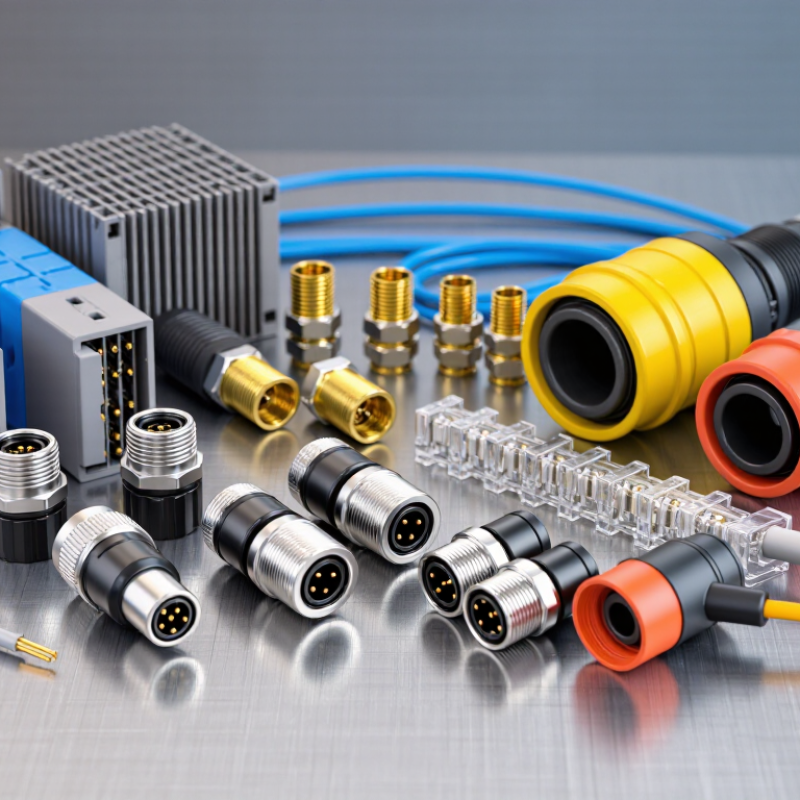
Cable connectors are small components with major consequences in global trade. They join power, data, and control circuits while protecting signals from vibration, moisture, and heat. Common options include USB-C connectors for compact electronics, RJ45 connectors for network equipment, coaxial connectors for radio systems, and circular connectors for industrial machinery. Each type has different pin layouts, shielding needs, and locking methods.
The global electronic connectors market was valued at about USD 84.1 billion in 2023, according to Grand View Research’s Electronic Connectors Market Size Report. The report also forecasts steady growth through 2030, driven by vehicles, automation, and communication equipment. Buyers should not select connectors by appearance alone. A metal shell may improve shielding, but it cannot replace correct voltage ratings, insertion-cycle testing, or ingress protection.
Small details matter. A warehouse team should check terminal plating, cable diameter, keying, and packaging labels before shipment. IEC standards can support consistent safety and performance requirements across markets. However, certification needs may differ by product category and destination.
That part is often underestimated. In my experience, a connector that fits during a bench test can loosen after repeated vibration or temperature changes. Suppliers should request drawings, test records, sample approvals, and traceability documents. The cheapest connector can become expensive after field failures, delayed customs checks, or rework.
Connector selection starts with the application, not the catalog photograph. Circular connectors suit vibration-heavy machinery and outdoor equipment. Rectangular connectors often simplify dense cabinet wiring. Coaxial designs protect high-frequency signals from electromagnetic interference. Terminal blocks remain practical for fixed industrial installations.
Material choices directly affect service life. Copper-alloy contacts provide reliable conductivity and spring force. Tin plating reduces cost, while nickel or gold plating supports harsher environments. Polyamide and thermoplastic housings resist heat and impact, but their performance varies by grade.
Check contact resistance, mating cycles, voltage rating, temperature range, and IP protection under IEC 60529. MarketsandMarkets estimates the global cable connectors market could grow from about USD 8 billion in 2023 to over USD 11 billion by 2028. That growth reflects wider electrification, but it does not make every connector suitable.
Tips: Request test reports, not only certificates. Compare salt-spray hours, vibration results, and actual cable compatibility. Ask whether performance data covers assembled connectors. A connector can pass laboratory testing and still fail after poor crimping. I have seen drawings specify excellent materials, yet omit strain relief details. That gap deserves attention. Bishop & Associates’ global connector market research also shows strong demand from automotive, industrial, and communications applications. Buyers should compare total installed cost, replacement access, and local supply stability. The cheapest part may become expensive during maintenance.
Industrial, commercial, and consumer applications require different cable connector priorities. Industrial connectors must tolerate vibration, dust, moisture, and repeated maintenance. Metal-bodied circular connectors suit machinery, control panels, and outdoor equipment. Look for secure locking systems, clear pin identification, and suitable IP protection. A high current rating alone does not guarantee dependable performance.
Commercial installations often favor speed and consistency. Terminal blocks, modular connectors, and preassembled cable systems can reduce installation time. However, installers should verify conductor size, insulation diameter, temperature limits, and contact resistance. Heat changes everything. A connector installed near lighting drivers or power supplies needs careful thermal evaluation. In busy buildings, touch-safe designs and strain relief also reduce service risks.
Consumer products usually demand compact size, low cost, and simple assembly. USB-style, coaxial, board-to-wire, and snap-fit connectors appear in appliances, displays, and personal electronics. Yet small connectors can create large problems when users pull cables instead of housings. Fit matters. During product evaluation, test repeated mating cycles, cable bending, and accidental side loads. Some connectors perform well in laboratory conditions but loosen after months of movement. That gap deserves honest attention. Buyers should request material data, inspection records, and sample testing before placing large orders. Clear documentation makes comparison easier and supports safer purchasing decisions across markets.
Choosing cable connectors for global buyers starts with standards, not catalog popularity. In field evaluations, I check connector geometry, current rating, insulation, and test records. IEC 60320 appliance couplers suit many equipment connections. USB Type-C supports compact data and power applications. Circular connectors remain valuable where vibration and moisture require stronger retention. The best option depends on the equipment.
Compatibility means more than matching a plug and socket. Buyers should verify pin assignment, voltage, amperage, shielding, keying, and mating cycles. A connector may fit physically yet fail electrically. That mistake can damage a control board.
I also inspect cable diameter and bend radius. Tight routing can weaken terminals over time. Regional mains systems require correct voltage and frequency ratings. Adapters alone cannot solve every mismatch.
Documentation should identify IEC or ISO requirements, material ratings, and factory test methods. Vague certificates deserve questions.
Safety requirements vary by destination and application.
Check insulation temperature, flammability class, ingress protection, touch protection, and strain relief. Industrial or medical equipment may require additional conformity evidence. Traceable production records also improve supplier reliability. Customs acceptance is not the same as safe operation.
Ask for samples, then perform insertion, pull, heat, and continuity checks under realistic loads. I once trusted a familiar connector shape too quickly. Its locking force failed during vibration testing. That experience still matters. Standards guide decisions, but application testing reveals uncomfortable gaps.
Selecting a cable connector begins with the application, not the catalogue photograph. A factory sensor near washdown equipment may need an IP67-rated connector, while an office display cable may need only low-cost shielding. Check voltage, current, temperature, vibration, mating cycles, and available space. For outdoor systems, verify UV resistance and sealing after installation, not only during laboratory testing. Small details matter.
MarketsandMarkets estimates the global electrical connectors market could grow from about USD 84.2 billion in 2023 to USD 106.2 billion by 2028. This growth reflects demand from vehicles, industrial automation, communications, and energy equipment. Grand View Research also identifies rising connectivity requirements across industrial and transportation applications. These reports suggest a wider market, but they do not prove that one connector suits every site.
Match the connector to recognized safety and performance requirements. Review insulation ratings, contact resistance, flame behavior, shielding, and ingress protection. For high-current equipment, calculate heat rise instead of trusting the maximum label value. For data applications, confirm impedance, bandwidth, and cable geometry together. A neat specification sheet can still mislead. A common field mistake is ignoring installation tools and technician access. If a connector is difficult to terminate, failure rates may rise despite excellent laboratory results. Test samples under realistic bending, moisture, dust, and repeated mating conditions before approving volume purchases.
| Connector Family | Typical Applications | Common Contact Configuration | Typical Current Range | Typical Voltage Range | Typical Environmental Protection | Typical Temperature Range | Main Advantages | Key Selection Considerations |
|---|---|---|---|---|---|---|---|---|
| Circular M-series | Factory automation, sensors, actuators, industrial control panels, and machine tools | Usually 3–12 contacts; screw, snap, or threaded coupling | Approximately 1–20 A per contact | Approximately 30–250 V AC/DC | IP44–IP68, depending on housing and sealing | Approximately −40°C to +105°C | Compact profile, reliable vibration resistance, and broad availability in signal and power versions | Match thread size, keying, pin count, shielding, cable diameter, and required ingress rating |
| Push-pull circular | Medical equipment, test instruments, industrial measurement, robotics, and portable equipment | Usually 2–20 contacts; push-pull locking | Approximately 1–15 A per contact | Approximately 30–250 V AC/DC | IP50–IP68, depending on the locking and sealing design | Approximately −40°C to +125°C | Fast tool-free mating, high mating-cycle capability, and good resistance to accidental cable pull | Confirm the required mating cycles, cable exit direction, panel cutout, coding, and cleaning requirements |
| RJ45 Ethernet | Industrial Ethernet, control cabinets, network switches, computers, and building networks | 8 contacts; shielded or unshielded twisted-pair termination | Typically up to 1.5 A per contact for standard data applications | Typically up to 100 V AC/DC for common data-network designs | IP20–IP67, depending on the enclosure and coupling system | Approximately 0°C to +70°C for office versions; industrial versions may reach −40°C to +85°C | Standardized networking interface, economical cabling, and support for data rates up to 10 Gb/s with suitable cable categories | Check cable category, shielding, transmission speed, PoE requirements, bend radius, and industrial sealing |
| USB Type-C | Consumer electronics, embedded devices, instrumentation, portable equipment, and data interfaces | 24 contacts; reversible plug orientation | Up to 5 A with suitable USB Power Delivery implementation | Up to 48 V DC with USB Power Delivery Extended Power Range; standard implementations may be lower | Usually IP20; sealed versions require a dedicated protective design | Commonly approximately −20°C to +85°C, depending on the component and application | Reversible mating, compact size, combined power and data capability, and high-speed protocol support | Verify power profile, data rate, cable identification, thermal limits, insertion cycles, and EMI control |
| D-subminiature | Industrial controllers, laboratory equipment, legacy computer interfaces, machine tools, and instrumentation | 9, 15, 25, or 37 contacts are common; screw-lock or latching hardware | Approximately 1–10 A per contact | Approximately 30–300 V AC/DC | Usually IP20; higher protection requires a sealed backshell or enclosure | Approximately −55°C to +125°C for selected industrial designs | Simple termination, strong panel mounting, multiple contact counts, and good suitability for mixed signal wiring | Consider backshell space, contact arrangement, shielding, locking hardware, and clearance requirements |
| Terminal block and pluggable terminal block | Control cabinets, power distribution, HVAC systems, industrial automation, and building equipment | Usually 2–24 positions; screw, spring-clamp, or push-in termination | Approximately 2–41 A per position | Approximately 150–1,000 V AC/DC | Usually IP20; enclosure-level protection is normally required | Approximately −40°C to +120°C | Easy field wiring, modular expansion, clear circuit separation, and convenient DIN-rail or panel mounting | Check conductor cross-section, creepage and clearance, torque, wire type, current derating, and touch protection |
| Automotive sealed connector | Vehicles, off-road equipment, agricultural machinery, battery systems, and engine-compartment wiring | Usually 1–16 contacts; crimp terminals with secondary locking | Approximately 5–60 A per contact, depending on terminal size | Approximately 12–800 V DC, depending on the low-voltage or high-voltage design | IP54–IP69K for suitable sealed assemblies | Approximately −40°C to +150°C; high-temperature versions may be higher | Strong vibration resistance, sealed terminals, compact packaging, and suitability for harsh mobile environments | Confirm wire gauge, terminal plating, sealing plugs, vibration class, temperature exposure, and high-voltage safety features |
| Solar PV connector | Photovoltaic modules, string wiring, combiner boxes, and outdoor DC power systems | Usually 1 positive or negative contact per connector pair; field-crimped or factory-terminated | Typically 15–50 A, depending on contact size and conductor cross-section | Commonly 1,000–1,500 V DC in modern photovoltaic systems | Typically IP65–IP68 when correctly mated | Approximately −40°C to +85°C or +105°C, depending on the design | Outdoor sealing, polarized mating, UV-resistant housings, and compatibility with long DC cable runs | Use only electrically compatible mating parts; verify DC voltage, current, cable size, UV exposure, and assembly tooling |
| Circular power connector | Motors, drives, industrial power supplies, robotics, lighting equipment, and mobile machinery | Usually 2–8 power contacts, sometimes with additional signal contacts | Approximately 10–100 A per contact | Approximately 250–1,000 V AC/DC | IP44–IP69K, depending on coupling and sealing construction | Approximately −40°C to +125°C | High power density, secure locking, optional shielding, and robust mechanical construction | Calculate continuous and inrush current, conductor size, thermal derating, touch safety, keying, and cable flexibility |
| Coaxial RF connector | Antennas, wireless communication, radio equipment, test systems, navigation, and measurement instruments | Single center contact with a concentric shield; threaded, bayonet, or snap coupling | Usually below 5 A; RF power capability varies strongly with frequency | Often rated from approximately 50 V to 1,500 V peak, depending on connector type and frequency | IP40–IP68, depending on the outdoor sealing design | Approximately −55°C to +125°C for selected industrial versions | Controlled impedance, effective shielding, low signal loss, and suitability for high-frequency transmission | Match impedance, operating frequency, return loss, cable type, insertion loss, weather sealing, and connector gender |
| Fiber-optic connector | Telecommunications, data centers, industrial networks, security systems, and long-distance communication links | One or more optical fibers; simplex, duplex, or multi-fiber formats | Not rated for electrical current through the optical path | Not rated for electrical voltage through the optical path | IP20–IP68, depending on the ruggedized enclosure | Approximately −40°C to +85°C for many industrial assemblies | High bandwidth, electrical isolation, immunity to electromagnetic interference, and long transmission distance | Specify fiber type, polish geometry, insertion loss, return loss, bend radius, contamination control, and cleaning method |
A cable connector joins power, data, or control circuits. It also shields connections from vibration, moisture, and heat. Small part, large impact.
Start with the application, not the catalog photograph. Circular connectors suit vibrating machinery and outdoor equipment. Rectangular designs support dense cabinet wiring. Coaxial types protect high-frequency signals from interference.
Check pin layout, keying, cable diameter, locking method, and shielding requirements. Confirm voltage rating and temperature range. A visual match proves very little.
Copper-alloy contacts support conductivity and spring force. Tin plating can reduce cost. Nickel or gold plating may suit harsher environments. Housing performance depends on the plastic grade.
Request contact resistance, mating-cycle, vibration, temperature, and salt-spray results. Review testing on assembled connectors, not loose components. Certificates alone may leave gaps.
Ingress protection indicates resistance to dust and water entry. Match the rating to the installation environment. Outdoor equipment may need stronger sealing than a dry cabinet.
Yes. Poor crimping, weak strain relief, vibration, or temperature changes can cause failure. A bench fit is not enough. I may overtrust laboratory results sometimes.
Request technical drawings, test records, sample approvals, and traceability documents. Warehouse staff should inspect plating, labels, cable diameter, and packaging. One missed detail can create rework.
Cable Connectors are essential components in modern electrical and electronic systems, providing secure links between cables, equipment, and power or data networks. This article explains their basic functions and importance in global trade, then compares common connector types according to design, materials, durability, conductivity, sealing performance, and resistance to heat, moisture, vibration, and corrosion. It also reviews suitable options for industrial machinery, commercial installations, communication systems, household devices, and other consumer applications.
For international buyers, choosing a connector involves more than price and appearance. Compatibility with cable size, voltage, current, signal type, installation method, and environmental conditions is equally important. The article also highlights the value of checking recognized technical standards, safety requirements, and testing documentation before purchase. By matching connector structure and performance with the specific application, buyers can improve system reliability, simplify installation and maintenance, reduce replacement costs, and support safer, more efficient projects across different markets.
