
Wenda Electronics
China’s top 10 Terminal Blocks manufacturers deserve careful comparison, not quick ranking. Market visibility alone does not prove engineering strength. A dependable manufacturer must demonstrate stable materials, accurate molding, secure clamping, and consistent electrical performance.
These manufacturers serve control cabinets, industrial machinery, renewable-energy systems, transportation equipment, and building automation. Their products may look similar on a catalog page. The differences appear inside the cabinet. Consider copper alloy quality, screw torque retention, flame resistance, wire-entry design, labeling space, and testing records. Small details matter.
Dr. Markus Mielke, a technical specialist in industrial connectivity, offers a useful reminder: “A reliable connection begins with the right terminal point, not with the tool.” This principle helps frame the comparison. Product breadth is important, but application experience matters more. A strong supplier should explain why a feed-through, grounding, fuse, or disconnect Terminal Blocks design fits a specific circuit.
This guide examines ten leading Chinese manufacturers through practical criteria. These include production capability, quality management, customization support, certifications, delivery reliability, and after-sales service. Factory evidence matters.
Still, no list is perfect. Rankings can change with new equipment, audits, product launches, or export requirements. Buyers should verify current certificates, test reports, and sample performance before making a final decision. A polished website is not enough.
The goal is not to declare one universal winner. It is to identify manufacturers that offer credible value for different electrical applications. Readers should compare specifications carefully, ask difficult questions, and inspect the connection before trusting the name.
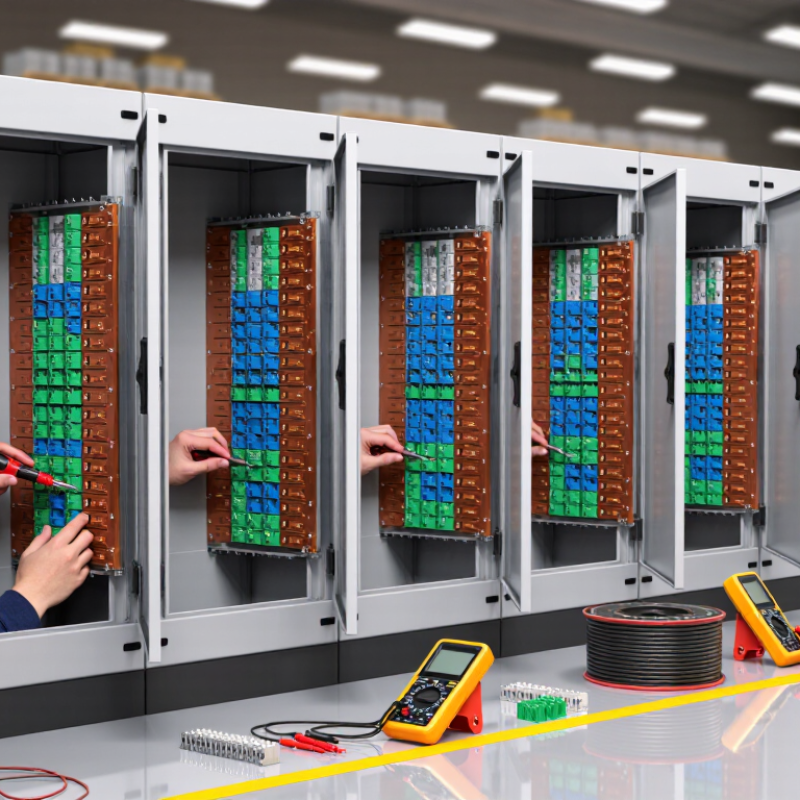
Terminal blocks are modular connectors that join electrical wires safely and neatly. Each block contains a conductive metal part inside an insulating housing. Wires enter through screw clamps, spring clips, or push-in connections. The housing prevents accidental contact between neighboring circuits. It also supports organized wiring inside control cabinets, distribution boxes, and machinery.
In practical installations, terminal blocks make inspection and maintenance much easier. A technician can label each connection, test voltage, and replace one wire without disturbing the entire circuit. Different types serve different tasks, including grounding, fuse protection, signal separation, and high-current distribution. For example, a control panel may use gray blocks for power, blue blocks for neutral conductors, and green-yellow blocks for protective earth. Clear labeling matters.
Small details affect reliability. Loose screws can create heat, while oversized wire can damage a clamp. Vibration may also weaken a poorly secured connection. I have found that checking torque values and wire stripping length prevents many avoidable faults. Still, color coding alone is not enough. It can fade, or a previous installer may use it incorrectly. A wiring diagram and a physical inspection should agree. Terminal blocks seem simple, but selecting the wrong current rating or insulation class can cause serious trouble. Their usefulness depends on careful design, accurate installation, and regular inspection.
Ranking China’s terminal block manufacturers requires more than comparing catalog prices. A credible assessment begins with product safety, dimensional accuracy, and production consistency. Inspectors should review insulation materials, screw torque, flame resistance, and current-carrying performance. Test reports must identify methods, dates, and sample numbers. Vague certificates are not enough.
Factory capability deserves equal weight. Reviewers can examine mold maintenance, automated assembly, incoming-material checks, and final inspection records. A reliable manufacturer should provide batch traceability from raw resin and metal parts to finished cartons. Trial orders reveal practical details, such as clamping strength, label clarity, and packaging damage after transport. Field feedback matters too. Installation teams often notice weaknesses that laboratory tests miss.
Supplier support should influence the ranking. Engineers need clear drawings, wiring guidance, tolerance data, and prompt technical responses. Delivery history, change-control procedures, and complaint handling also show operational maturity. Environmental controls and worker safety should be checked during an on-site visit, not accepted from a brochure. No ranking is perfect. A polished factory tour can hide unstable subcontracting, while a smaller plant may offer better process discipline. Reviewers should record evidence, revisit doubtful claims, and explain how each score was assigned. Price can be considered, but it should never outweigh verified safety, repeatable quality, and responsible communication.
China’s Top 10 Terminal Block Manufacturers should be assessed through measurable engineering criteria, not online popularity. Buyers usually compare current ratings, insulation materials, clamping reliability, temperature rise, and production consistency. The IEC 60947-7-1 standard provides a useful reference for low-voltage terminal blocks.
Market data also shows why this sector deserves closer inspection. Grand View Research estimates that the global terminal block market will continue expanding through 2030, supported by industrial automation, renewable energy, and control-panel demand. Meanwhile, MarketsandMarkets reports strong growth in industrial control and factory automation equipment. These trends are increasing demand for compact, vibration-resistant connections in Chinese manufacturing projects.
A practical top-ten review should examine factory audits, traceability records, and laboratory test reports. Check whether copper parts remain stable after repeated tightening. Inspect the screw head, too. Small details matter during installation. Manufacturers with automated molding, in-house testing, and documented quality systems usually offer better consistency. Experience has taught many buyers that attractive samples can hide uneven batch performance. This is where evaluation becomes less comfortable, but more reliable.
Product selection should also consider wire range, mounting method, flame-retardant housing, and ambient temperature. Some manufacturers perform well in standard panels but struggle with high humidity or continuous vibration. Independent certification, clear technical drawings, and responsive engineering support deserve equal weight. The strongest candidates are not simply large exporters; they demonstrate repeatable production, transparent data, and practical field experience.
China’s top ten terminal block manufacturers are best compared through product lines, technologies, and application fit. Product ranges often include feed-through, ground, fuse, disconnect, barrier, and multi-level blocks. Compact DIN-rail designs serve control cabinets with limited space. High-current versions support power distribution and motor circuits.
MarketsandMarkets estimated the global terminal block market at about USD 3.8 billion in 2023. Its report projects growth toward roughly USD 5.2 billion by 2028, driven by factory automation, renewable energy, and infrastructure upgrades. Chinese producers increasingly use flame-retardant materials, copper-alloy contacts, and automated screw-torque control. Spring-clamp and push-in connections can reduce wiring time, although field technicians still debate long-term maintenance preferences.
Applications reveal practical differences. Rail transport requires vibration resistance and stable insulation. Solar inverters need higher voltage ratings and clear polarity identification. Industrial controllers demand narrow widths, reliable labeling, and resistance to heat, dust, and electrical noise. IEC 60947-7-1 remains an important reference for low-voltage terminal blocks, while IEC 60664-1 guides insulation coordination. Some catalog claims remain difficult to compare because testing conditions differ. That matters. Buyers should request test reports, temperature-rise data, salt-spray results, and samples before approving volume orders. A polished housing is not enough. The strongest evaluation combines laboratory evidence with cabinet assembly experience.
| Rank | Manufacturer Profile | Main Product Lines | Key Technologies and Design Features | Common Standards and Ratings | Typical Industry Applications |
|---|---|---|---|---|---|
| 1 | Profile A High-volume supplier |
DIN-rail feed-through terminal blocks; PE protective-earth blocks; neutral and multi-level blocks |
Spring-clamp and screw-clamp connection systems; modular housing designs; flame-retardant polyamide insulation; marker and bridge accessories |
IEC 60947-7-1; IEC 60947-7-2; UL 1059; TS35 DIN-rail compatibility |
Industrial control panels, factory automation, motor-control cabinets, machine tools, and building distribution equipment |
| 2 | Profile B Control-panel specialist |
Feed-through blocks; disconnect and test blocks; fuse terminal blocks; sensor and actuator terminals |
Compact modular architecture; touch-safe finger protection; plug-in cross-connection; replaceable fuse carriers; visual circuit identification |
IEC 60947-7-1; IEC 60947-7-3; UL 1059; RoHS-compliant material options |
PLC cabinets, process instrumentation, HVAC controls, packaging machinery, and water-treatment systems |
| 3 | Profile C High-current supplier |
Power distribution blocks; high-current feed-through blocks; barrier terminal blocks; stud-type terminals |
Large conductor-entry capacity; reinforced barriers; torque-controlled screw connections; copper-alloy current paths; heat-resistant insulation |
IEC 60947-7-1; IEC 60999; UL 1059; voltage ratings commonly up to 1,000 V AC |
Renewable-energy equipment, battery systems, industrial power supplies, elevators, heavy machinery, and distribution panels |
| 4 | Profile D Automation-oriented supplier |
Multi-tier terminal blocks; miniature terminals; sensor terminals; feed-through and PE versions |
Space-saving two- and three-level structures; push-in connection options; integrated test points; tool-assisted wiring; standardized marker channels |
IEC 60947-7-1; IEC 60947-7-2; UL 1059; DIN EN 60204-1 panel-use compatibility |
Robotics, motion control, semiconductor equipment, electronic assembly lines, and compact automation cabinets |
| 5 | Profile E Interface module supplier |
Relay interface terminals; signal-conditioning terminals; diode and LED terminals; fuse and disconnect modules |
Pluggable relay interfaces; polarity protection; status LEDs; replaceable fuses; galvanic isolation through relay or optocoupler interfaces |
IEC 60947-5-1; IEC 60947-7-1; UL 508; UL 1059 |
Industrial I/O, alarm systems, burner controls, building automation, energy monitoring, and machine safety circuits |
| 6 | Profile F PCB connection supplier |
PCB terminal blocks; pluggable terminal blocks; wire-to-board connectors; barrier-style PCB terminals |
Through-hole and surface-mount options; selectable pin spacing; angled and vertical wire entry; captive screws; coding and polarization features |
IEC 60998; IEC 60947-7-1; UL 1059; common pitches from 2.50 mm to 10.16 mm |
Power supplies, HVAC controllers, LED drivers, instrumentation, consumer appliances, and industrial electronics |
| 7 | Profile G Heavy-duty supplier |
Barrier strips; enclosed terminal blocks; panel-mount terminals; ceramic and high-temperature terminals |
Enclosed finger-safe designs; fixed mounting holes; high-temperature insulation choices; vibration-resistant screw clamping; clear circuit separation |
IEC 60947-7-1; UL 1059; IEC 60529 enclosure considerations; application-dependent IP protection |
HVAC power units, industrial ovens, lighting equipment, transportation systems, generators, and outdoor electrical enclosures |
| 8 | Profile H Customization supplier |
Customized terminal assemblies; marked terminal strips; pre-wired terminal panels; special mounting terminals |
Custom hole patterns and labeling; laser or thermal-transfer marking; harness preparation; customer-specific circuit grouping; application-specific plating |
IEC 60947-7-1; UL 1059; RoHS and REACH material requirements where specified; customer drawing compliance |
OEM machinery, rail equipment, marine control systems, custom control panels, and low-volume engineered projects |
| 9 | Profile I Low-voltage supplier |
Small-pitch terminal blocks; signal terminals; miniature PCB terminals; pluggable wire connectors |
Reduced footprint; fine-pitch contact layouts; captive screw or spring-clamp options; low insertion force; polarity and coding features |
IEC 60998; IEC 60947-7-1; UL 1059; common pitches from 2.00 mm to 5.08 mm |
Sensors, measurement instruments, smart-home controllers, medical electronics, telecom equipment, and compact control devices |
| 10 | Profile J Export-focused supplier |
General-purpose terminal blocks; DIN-rail accessories; grounding terminals; disconnect, fuse, and test modules |
Modular product families; interchangeable accessories; color-coded housings; automated assembly; multilingual marking and packaging support |
IEC 60947-7-1; IEC 60947-7-2; UL 1059; CE marking based on applicable European requirements |
Export control panels, industrial machinery, building services, solar inverters, charging equipment, and electrical distribution systems |
China Top 10 Terminal Block Manufacturers?
How to Select a Reliable Chinese Terminal Block Supplier
A supplier list is only a starting point. A reliable Chinese terminal block manufacturer should show stable production, clear specifications, and traceable quality records. Check housing material, rated voltage, current capacity, wire range, and operating temperature. These details must match your actual panel design, not only a catalog image.
Ask for recent test reports and certificates from recognized laboratories. Verify their scope, validity, and issuing organization. Product designs should align with relevant IEC requirements and your target market’s safety rules. Request samples from normal production, not specially prepared pieces. Examine screw torque, clamping strength, plastic finish, and marking durability. Small details matter.
Visit the factory when the project is important. Review incoming material checks, mold maintenance, assembly controls, and final inspection records. Ask how defective batches are isolated and corrected. A supplier that answers clearly is easier to trust. Lead time should be supported by capacity data, not promises alone. Communication quality also matters, especially when drawings change.
No supplier is flawless. Even a well-managed factory may experience material delays or tooling issues. That is why a written quality agreement, approved sample, inspection plan, and change-notification process are essential. Cost can guide the shortlist, but it should never replace evidence. A lower quotation may hide thinner metal parts, weaker springs, or inconsistent plating. Test carefully before committing to volume.
A terminal block joins electrical wires through a conductive metal part inside an insulating housing.
They are used in control cabinets, distribution boxes, machinery, and industrial control panels.
Technicians can label connections, test voltage, and replace one wire without disturbing the whole circuit.
Correct screw torque, proper wire stripping, and suitable wire size help prevent overheating.
No. Colors can fade, and earlier installers may use them incorrectly.
Review safety testing, dimensional accuracy, insulation quality, flame resistance, and current-carrying performance.
Check mold maintenance, assembly controls, incoming-material inspections, and final inspection records.
Trial orders reveal clamping strength, label clarity, packaging damage, and actual batch consistency.
Compare current rating, wire range, mounting method, insulation class, temperature limits, and housing flame resistance.
Price matters, but verified safety, repeatable quality, traceability, and technical support deserve greater weight.
Terminal Blocks are essential components used to connect, organize, and protect electrical wires in control panels, automation systems, power distribution equipment, and industrial machinery. This article explains their basic structure, common applications, and the reasons they remain important for safe and efficient wiring. It also introduces a ranking framework for evaluating China’s leading manufacturers, considering product quality, technical capabilities, production capacity, certifications, customization services, delivery reliability, and customer support.
The overview compares the product lines, manufacturing technologies, and major industry applications offered by the top ten Chinese manufacturers without focusing on specific brand names. It also discusses how Terminal Blocks are adapted for different environments, including rail-mounted, barrier, high-current, modular, and specialized connection systems. Finally, readers will learn how to select a reliable Chinese supplier by reviewing materials, testing procedures, quality management, compliance documentation, communication, sample services, pricing, lead times, and after-sales support. This guidance can help buyers make practical sourcing decisions and build dependable long-term supply relationships.
